what-is-a-gene
What Is a Gene?
The four-letter code behind every living thing — what DNA is, what a gene actually does, and why changing one letter can change a life. Start here.
The walkthrough
Beat by beat
HOOK
0:27
01HOOK
Everything alive runs on the same four-letter code — A, T, G, and C `F1`. Just four letters; but spell out three billion of them in the right order `F2`, and you get a human being. Change a single letter, and you can change a life. This is how that works.
02DNA STRUCTURE
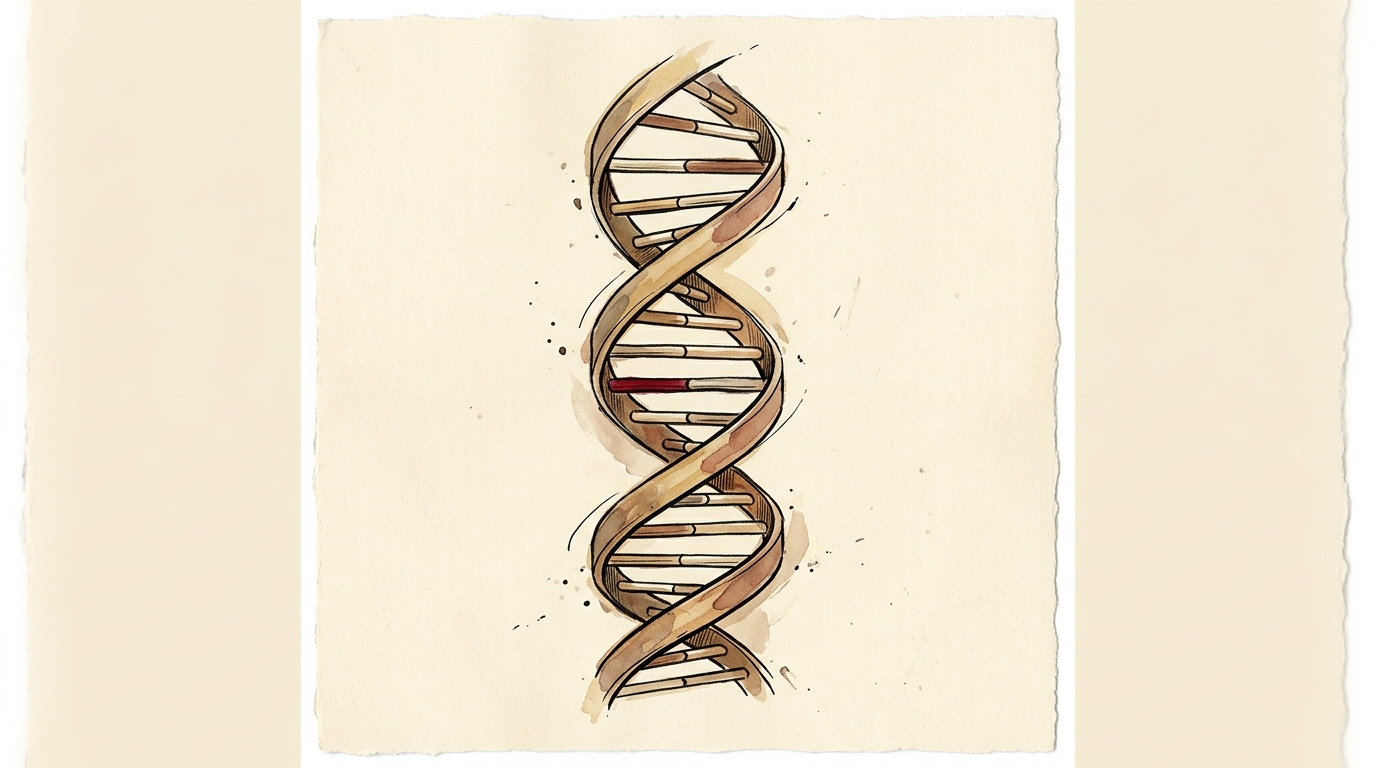
Those letters are molecules called bases, strung along a long backbone. And they pair by a strict rule — A always with T, G always with C `F3`. Two matching strands twist around each other into the shape you know: the double helix. That pairing rule is the whole trick — it's how DNA copies itself, each strand a template for the other.
03THE GENE
So what is a gene? A gene is just one stretch of that code — a single instruction, usually the recipe for one protein `F4`. You have about twenty thousand of them `F5`, spaced along those three billion letters `F2`, packed into nearly every cell. Most of your DNA isn't genes at all — the genes are the stretches that actually get read.
04THE CENTRAL DOGMA (hero)
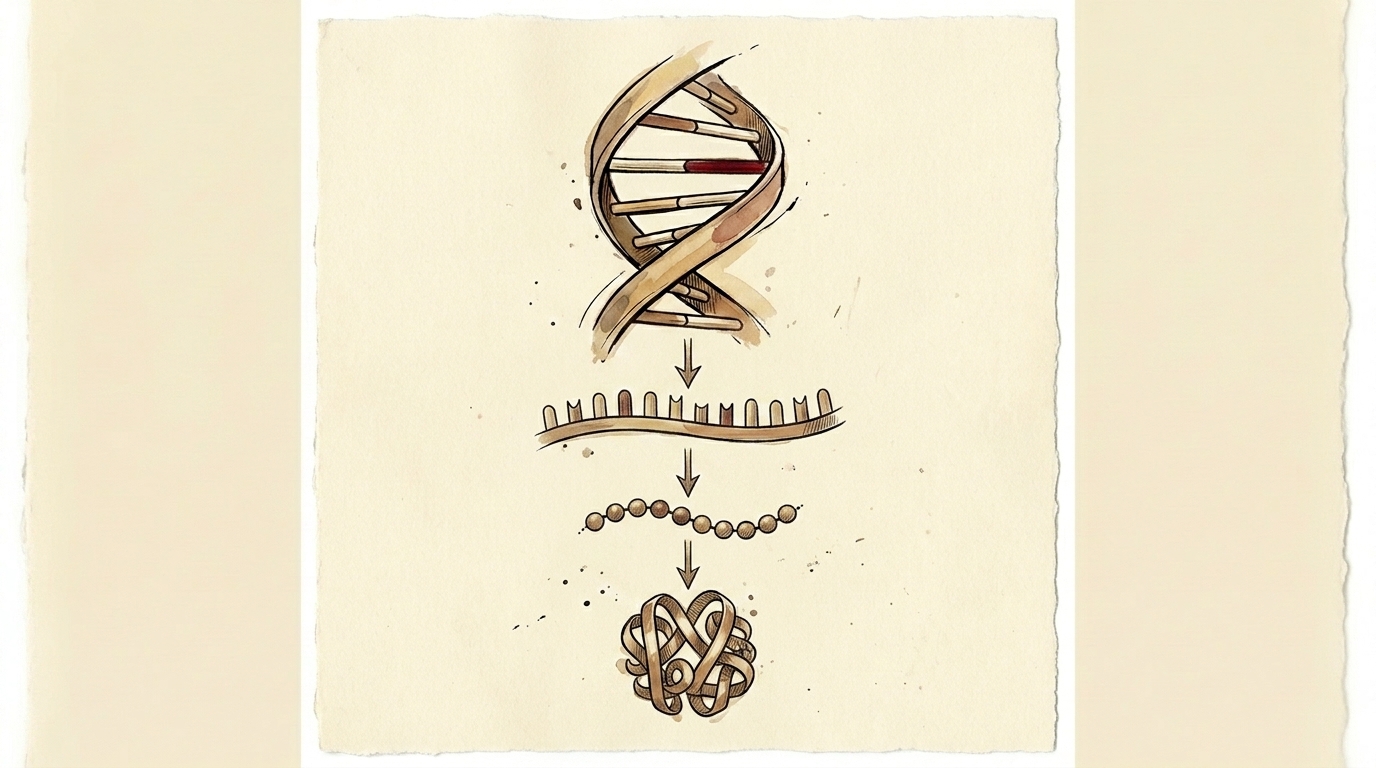
Here's the part that turns code into you. A gene never builds a protein directly. First it's copied into a working message — that's RNA `F6`. Then a molecular machine reads that message three letters at a time. Each three-letter word — a codon — calls for one amino acid `F7`, and the amino acids link into a chain. That chain folds into a protein — a tiny machine that does an actual job. DNA, to RNA, to protein: biologists call it the central dogma `F6`.
05ONE LETTER
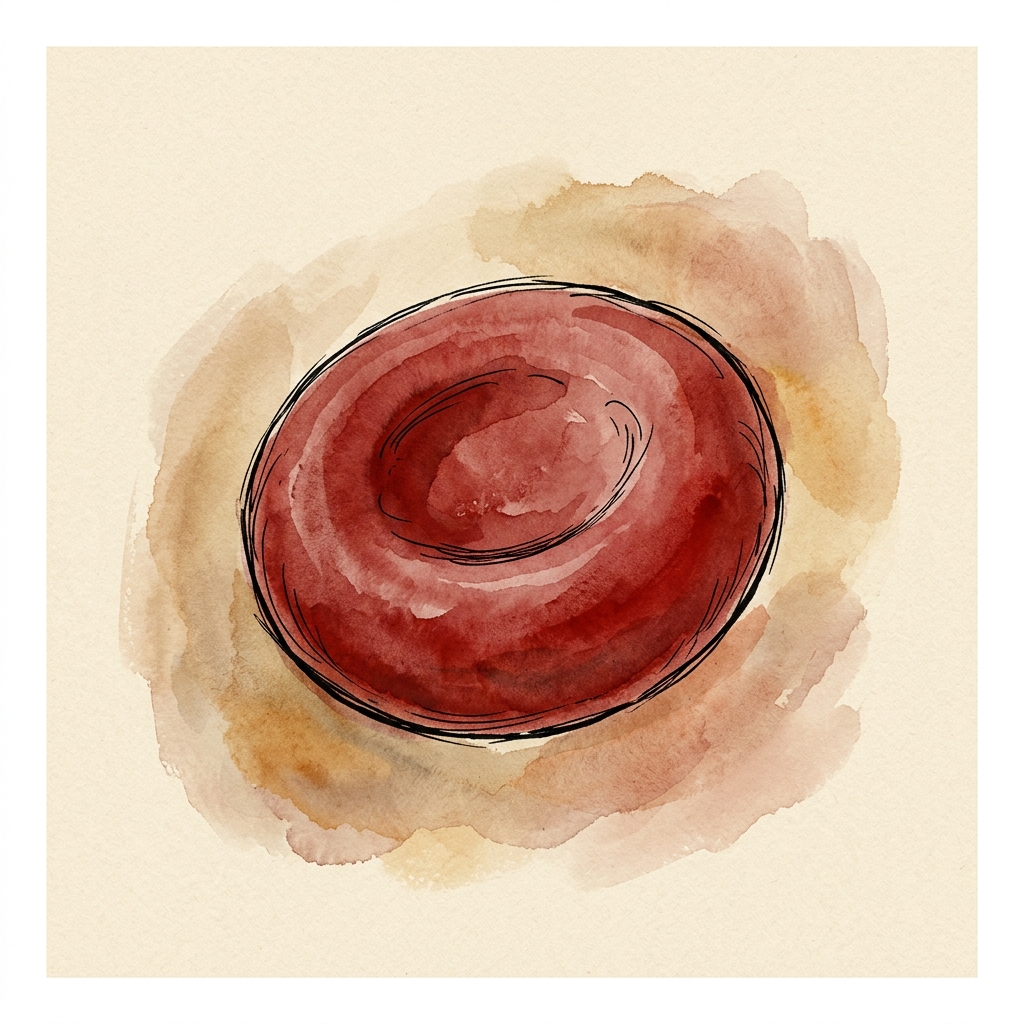
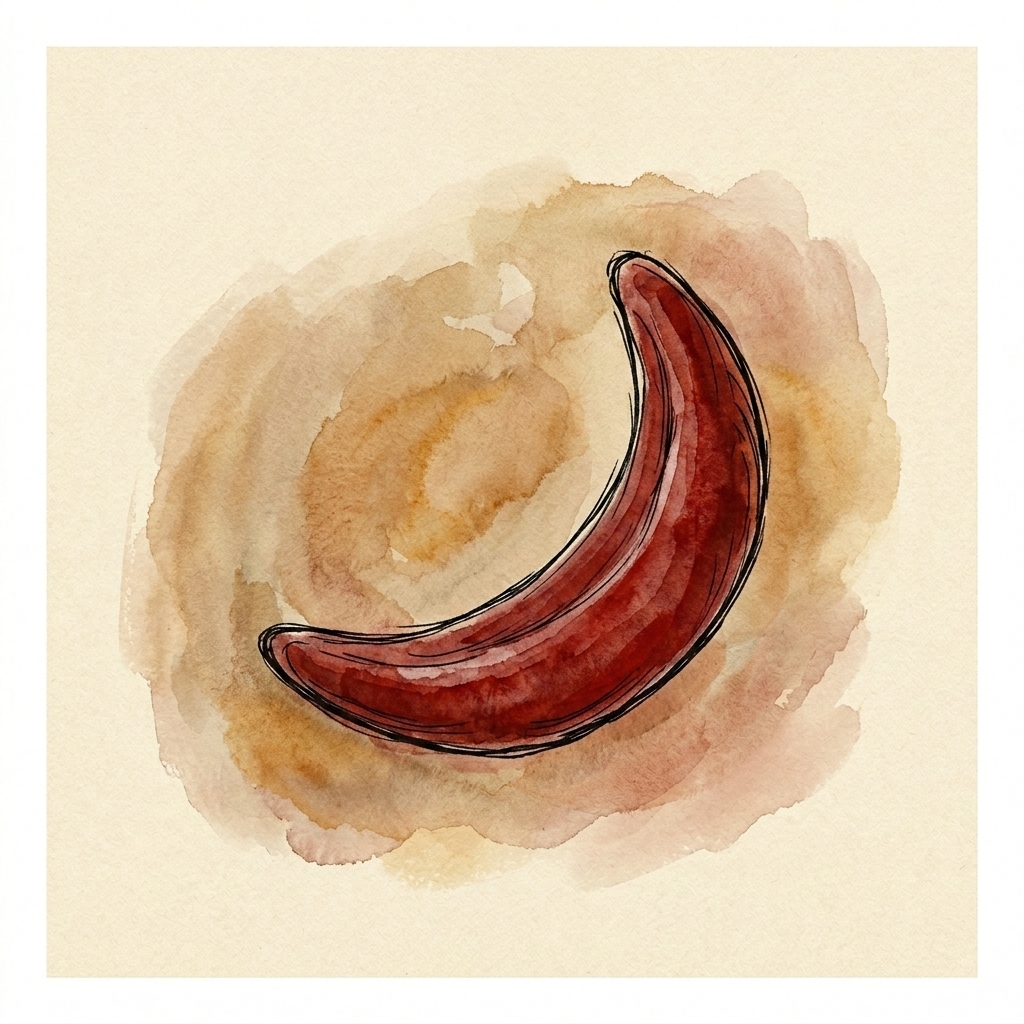
Now you can see why one letter matters. Swap a single base, and the codon can change — and a different amino acid goes into the chain `F8`. One wrong building block can bend a protein's shape, or stop it working. In sickle-cell disease, exactly one such swap turns round red blood cells into stiff crescents `F8b`. One letter, one protein, one life — that's the story every episode of this channel tells.
06READING THE CODE
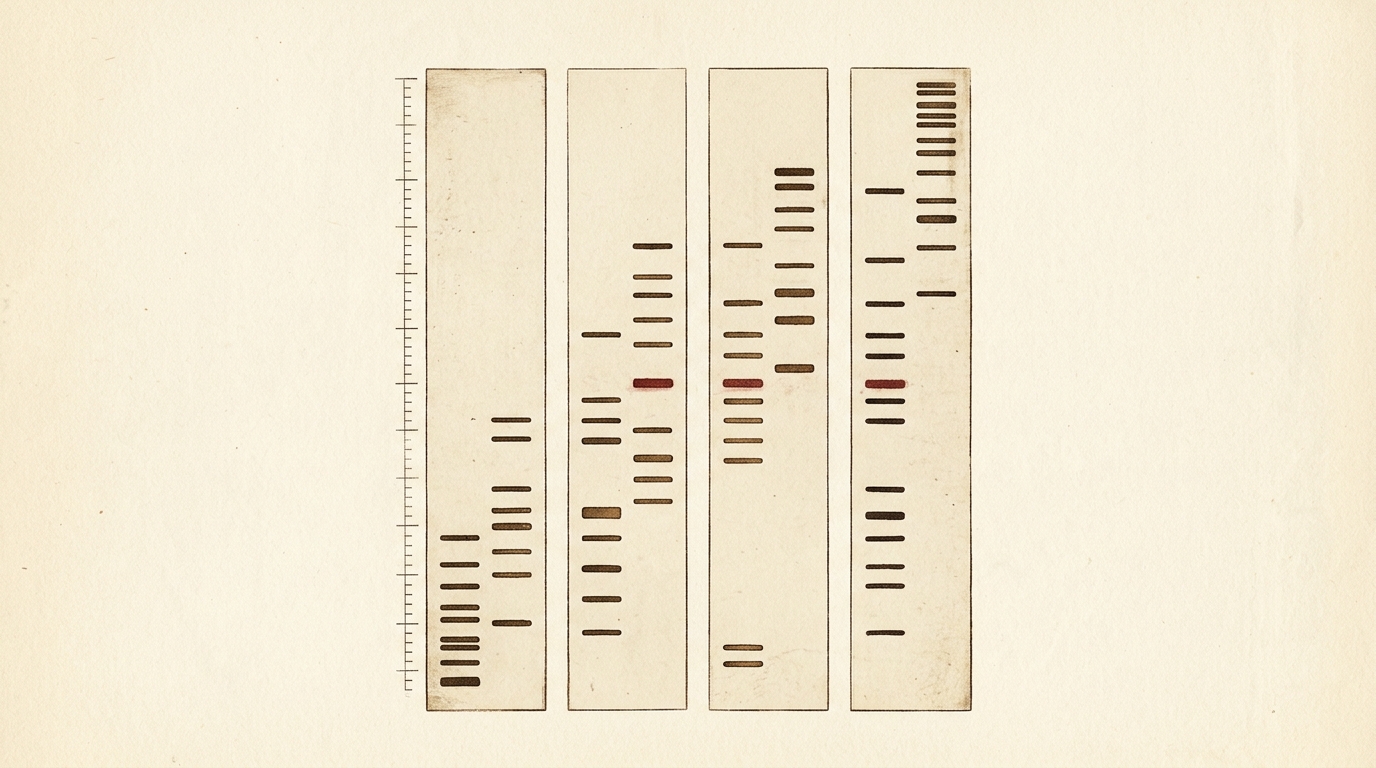
For most of history, all of this was invisible. Then in 1977, Frederick Sanger found a way to read the letters in order — to actually spell out a gene `F9`. That one advance is why we can now find the single base that's out of place — and, increasingly, fix it.
07WHY IT MATTERS
Reading the code changed everything: it's how we trace a disease back to its source, how we read ancestry, how modern medicines get designed. Every gene has a story — a discovery, a mechanism, a consequence.
08SIGN-OFF
DNA, to gene, to message, to protein, to you. Four letters, read in threes, written three billion times. Now you can read them too. — The Gene Channel.
The write-up
In one line: Everything alive is written in a four-letter chemical code (A, T, G, C); a gene is one stretch of that code — usually the recipe for one protein; it's copied into an RNA message and read three letters at a time into a chain of amino acids that folds into a working protein (the central dogma); change a single letter and you can change a protein, and a trait — which is the move every other episode of this channel explores.
The four letters
DNA is a long molecule built from just four chemical "letters" — the bases adenine (A), thymine (T), guanine (G), and cytosine (C). They don't sit loose: they pair by a strict rule — A with T, G with C — and two complementary strands twist together into the double helix. That pairing rule is the engine of heredity: because each strand specifies the other, DNA can be copied faithfully every time a cell divides. A single human genome is roughly three billion base pairs long.
The gene
A gene is a single stretch of that code — one instruction, usually the recipe for one protein. Humans have about twenty thousand protein-coding genes (the number is an estimate, still being refined, somewhere around 19,000–21,000). Strikingly, the protein-coding genes are only a small fraction of the genome; most of our DNA does other things or is not read into protein at all. The genes are the chapters that actually get read.
The central dogma (how code becomes you)
A gene never builds a protein directly. First it is transcribed into a working copy made of RNA (messenger RNA). That message is then translated: a molecular machine, the ribosome, reads it three letters at a time. Each three-letter word — a codon — specifies one amino acid, and the amino acids are linked into a chain. The chain folds into a three-dimensional protein, the tiny machine that actually does a job in the cell. DNA → RNA → protein: this flow of information is what Francis Crick named the central dogma of molecular biology.
Why one letter matters
Because the code is read in fixed three-letter words, swapping a single base can change a codon — and a different amino acid is built into the chain. One wrong building block can bend a protein's shape or stop it working. The classic example is sickle-cell disease: a single base change in the HBB gene (an A→T, turning the codon GAG into GTG) swaps one amino acid (glutamic acid → valine) and turns round red blood cells into stiff crescents. One letter, one protein, one trait — the pattern behind much of human genetics.
Reading the code
For most of history all of this was invisible. In 1977, Frederick Sanger developed a way to read the order of the bases — DNA sequencing — for which the dideoxy "chain-termination" method is named. Being able to spell out a gene is what lets us find the single base that is out of place, trace a disease to its source, and increasingly, correct it. Reading the code is the foundation of modern genetics and medicine — and of every story this channel tells.
Sources
Full claim-by-claim evidence is in references.md. Primary anchors:
- NHGRI — Gene (glossary) — definition; ~20,000 genes
- NHGRI — Base Pair / Double Helix — the four bases, A·T / G·C pairing
- NIH — First complete sequence of a human genome — ~3 billion base pairs
- NHGRI — Codon / Genetic Code — codons; 3 bases → 1 amino acid
- Crick (1970) Nature — Central dogma of molecular biology
- Sanger, Nicklen & Coulson (1977) PNAS — DNA sequencing
- Amaral et al. (2023) — The status of the human gene catalogue — why the gene count is still an estimate
Accuracy note: The ~20,000 human gene count is an estimate (commonly cited ~19,000–21,000), so the narration keeps it qualitative ("about twenty thousand"). The sickle-cell example is the well-established HBB c.20A>T (Glu→Val) change — covered in depth in the HBB ("One Letter") episode. The central dogma here is the standard DNA→RNA→protein information flow; it is a teaching simplification (it omits reverse transcription and the many regulatory and non-coding roles of RNA).
The evidence
Every claim, sourced
Each [F#] you hear in the film links to the source it came from. Nothing gets narrated until every one is checked and signed off.
Sign-off
- PhD sign-off — facts above are correct; the ⚠️ gene-count figure stated correctly (qualitative) in
script.md. (Signed off 2026-06-13.) - Numbers verified or kept qualitative: gene count "about twenty thousand" (⚠️ estimate ~19–21k); genome "three billion" base pairs; Sanger "1977".
- Locked cut approved: ~2.5–3 min, all 8 beats kept (no fold).
Gate OPEN → narration + render may proceed.
- F1
DNA is written in four chemical "letters" — bases A, T, G, C (adenine, thymine, guanine, cytosine)
The four nucleobases of DNA; each base is a nucleotide building block
- F2
A human genome is ~3 billion base pairs of DNA
The first truly complete (T2T) human genome is ~3.05 billion base pairs across 23 chromosomes
- F3
The bases pair by a strict rule — A with T, G with C — and two strands twist into the double helix
Complementary base pairing (A=T, G≡C); antiparallel strands form the double helix; each strand templates the other in replication
- F4
A gene is a stretch of DNA — a single instruction, usually the recipe for one protein
"A gene is the basic physical and functional unit of heredity … a sequence of nucleotides … that codes for a … protein"
- F5⚠ commonly confused
Humans have about 20,000 protein-coding genes
An estimate, still being refined — consensus ~19,000–21,000 (e.g. GENCODE ~19,370; CHESS/analyses ~19,900). Narrated qualitatively.
- F6
A gene is copied into an RNA message, then read into a protein — DNA→RNA→protein, the central dogma
Transcription (DNA→mRNA) then translation (mRNA→protein); Crick's central dogma of molecular biology
- F7
The code is read three letters at a time — a codon — and each codon calls for one amino acid; amino acids chain and fold into a protein
The genetic code is read in 3-base codons (64 codons specify 20 amino acids + stop); amino acids are the building blocks of proteins
- F8
Swapping a single base can change a codon → a different amino acid goes into the chain (a point mutation)
A single base substitution can alter one codon and thus one amino acid, changing the protein
- F8b
In sickle-cell disease, one such swap turns round red cells into stiff crescents
HbS = single base substitution (HBB c.20A>T, Glu→Val); deoxy-HbS polymerizes → sickled cells (see the HBB episode's gate for primary sources)
- F9
In 1977, Frederick Sanger found a way to read the letters in order — DNA sequencing
Sanger, Nicklen & Coulson 1977 (dideoxy chain-termination "Sanger sequencing"); first method to read base order at scale