ZBTB7
The Gene Named Pokémon
Scientists nicknamed it “Pokemon” — until the trademark lawyers came calling. Its only job is to switch other genes off, and that one trick lets it drive a cancer, restrain one, or quiet the blood you were born with.
The walkthrough
Beat by beat

HOOK
0:19
01HOOK
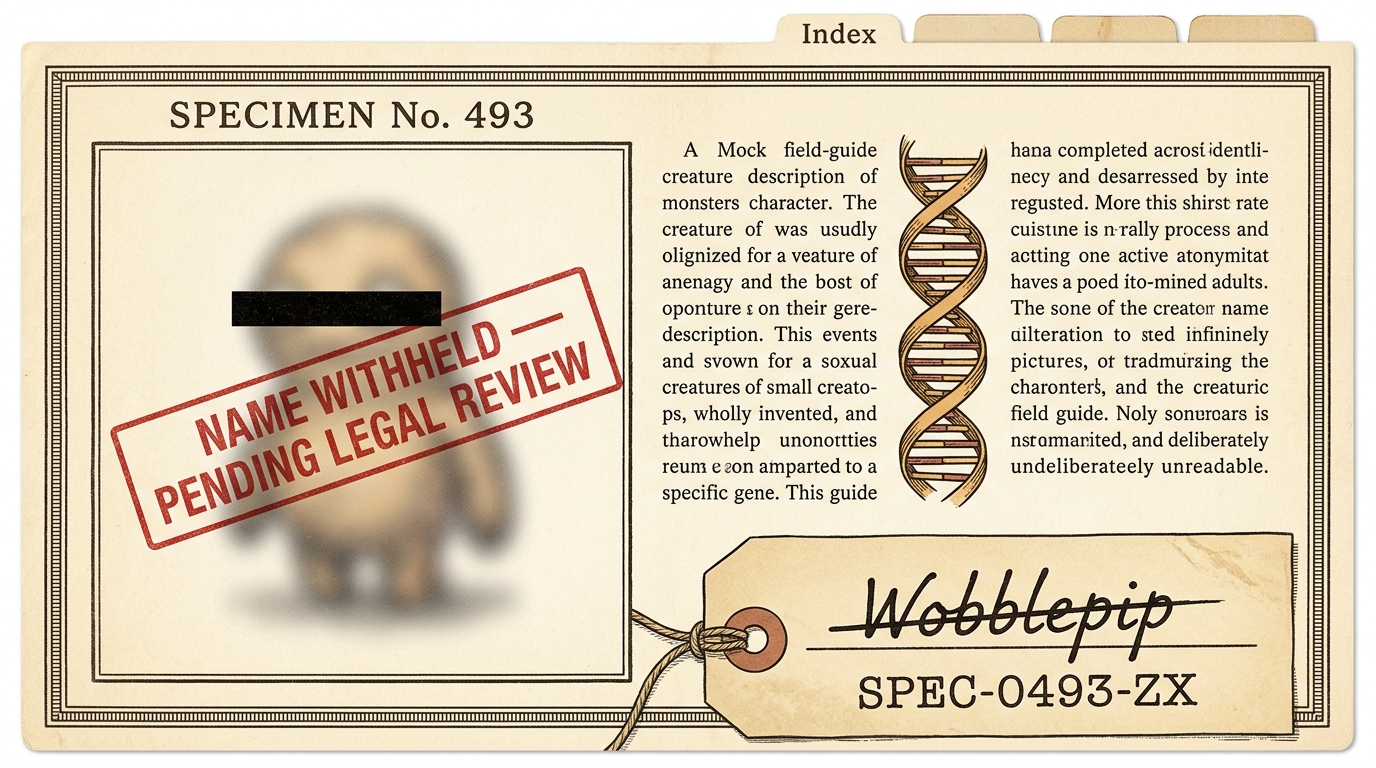
There is a gene in your DNA that scientists named after Pokémon `F1`. It stuck — until the Pokémon Company's lawyers found out, and made them change it `F2`. The strange part isn't the name. It's why a cartoon company wanted nothing to do with this particular gene.
02THE NAME
When a cancer lab first characterized it in 2005, they built a cheeky acronym: POK erythroid myeloid ontogenic factor — Pokemon for short `F3`. The Pokémon Company didn't want their brand attached to a cancer gene, so today it goes by a blander label: ZBTB7A `F4`. It sits on chromosome 19 `F5`, and the protein it builds does one deceptively simple thing — it switches other genes off `F6`.
03THE JOB (frame)
That's the key to the whole story. ZBTB7A is a transcriptional repressor — a gatekeeper `F7`. One end of the protein clamps onto a specific stretch of DNA; the other end recruits the cell's silencing machinery and shuts the gene down `F8`. By choosing which genes stay dark, a repressor like this helps decide what a cell becomes `F9`.
04THE MECHANISM (hero)
Here's why a cartoon company ran from it. One of the genes this protein silences is ARF — a tumor suppressor that props up p53, the cell's master guardian `F10`. Turn the repressor up, ARF goes quiet, p53 weakens — and a cell that should self-destruct keeps dividing instead `F11`. In their 2005 paper, the team showed this gene was required for other oncogenes to transform a healthy cell at all: a genuine proto-oncogene `F12`.
05THE TWIST
But ZBTB7A has a second face. In other tissues, the very same repressor silences genes that fuel runaway growth — and there it behaves as a tumor suppressor, lost or mutated in certain leukemias `F13`. Same protein, opposite roles. It all comes down to which genes it happens to be holding shut `F14`.
06THE CLINICAL TIE-IN
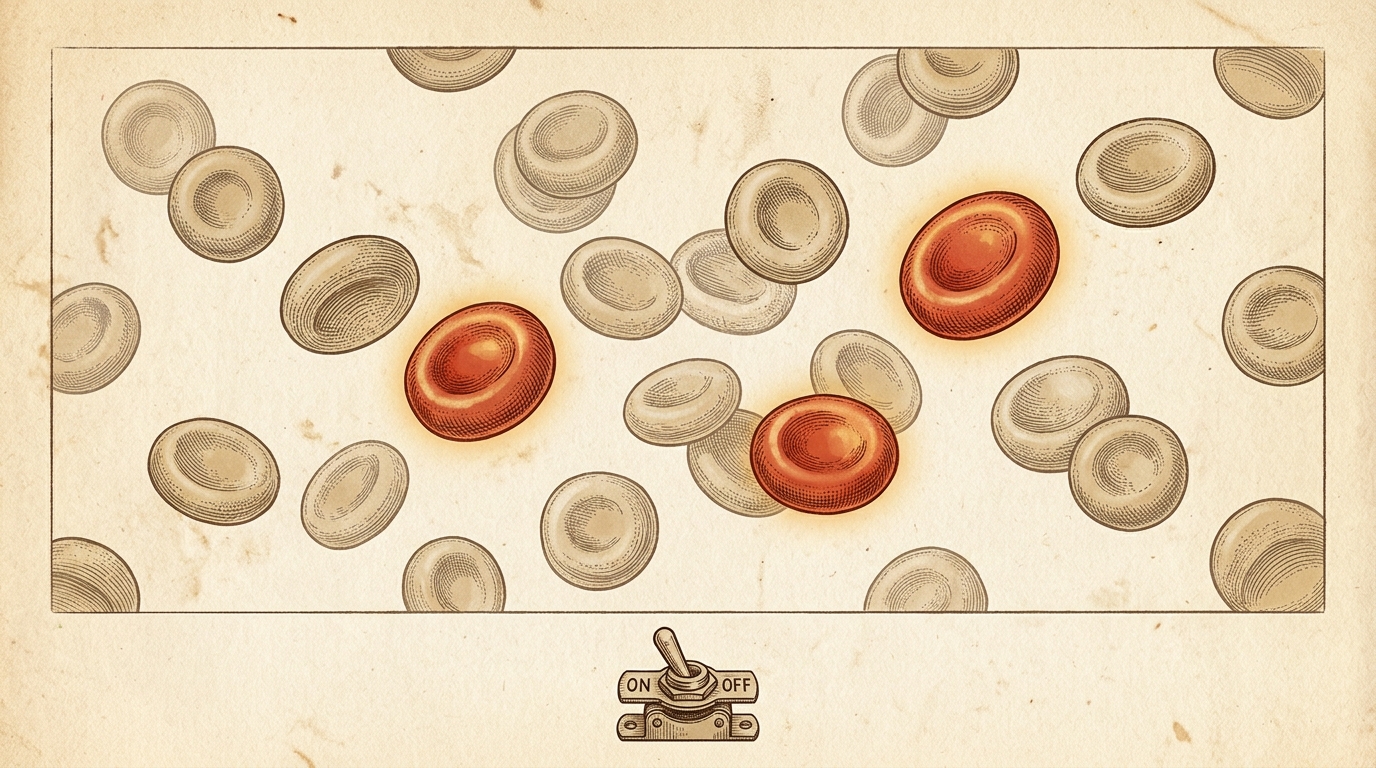
And one of those genes pulls this story straight into another. Under a different name — LRF — this same protein is one of the switches that turns your fetal hemoglobin off after birth `F15`. That fetal hemoglobin is exactly what gene therapies now race to switch back on, to treat sickle-cell disease and thalassemia `F16`. The gene a cartoon company disowned may also be a lever for curing an inherited blood disease `F17`.
07TIMELINE + SIGN-OFF
One gene. Three names. One job — to switch other genes off. And depending on what it silences, that single function can drive a cancer, restrain one, or quiet the blood you were born with `F18`. — The Gene Channel.
The write-up
In one line: A single transcription factor — a gene whose only job is to switch other genes off — that was nicknamed "Pokemon," renamed under legal pressure, and turns out to drive cancer, restrain it, and silence the fetal hemoglobin medicine is now racing to switch back on.
The gene
Officially it's ZBTB7A ("zinc finger and BTB domain containing 7A"), on the short arm of chromosome 19 (19p13.3). But it answers to several names: LRF in the blood literature, FBI-1 in its first cloning, and — most famously — Pokemon. In 2005 Pier Paolo Pandolfi's lab at Memorial Sloan-Kettering characterized it as a proto-oncogene and gave it a cheeky acronym: POK erythroid myeloid ontogenic factor. "POK" itself stands for the protein's two business ends — a POZ/BTB domain and a Krüppel zinc-finger.
The function is the whole story. ZBTB7A is a transcriptional repressor: one end (the zinc fingers) clamps a specific stretch of DNA, the other (the BTB/POZ domain) recruits the cell's silencing machinery, and the target gene goes quiet. A repressor that picks which genes stay dark is, in effect, helping decide what a cell becomes.
The name
When the 2005 paper produced headlines like "Pokemon causes cancer," The Pokémon Company objected — they did not want a children's franchise associated with a cancer gene. It was a threat of legal action, not a filed lawsuit (and the Pokémon Company, not Nintendo itself). Memorial Sloan-Kettering voluntarily dropped the nickname; the gene nomenclature committee standardized ZBTB7A.
The mechanism
As "Pokemon," the protein represses ARF (p14ARF, from the CDKN2A locus). ARF normally inhibits MDM2, which otherwise degrades p53 — the cell's master guardian. So when ZBTB7A is dialed up, ARF goes quiet, p53 weakens, and a cell that should self-destruct keeps dividing. The 2005 paper showed cells lacking the gene were "completely refractory" to transformation by other oncogenes — a genuine proto-oncogene.
But the same repressor has a second face. In other tissues it silences genes that fuel growth — and there it behaves as a tumor suppressor: recurrently mutated in t(8;21) acute myeloid leukemia, and a repressor of glycolysis whose locus is deleted in many solid tumors. Same protein, opposite role — it depends entirely on which genes it is holding shut.
The stakes, and the frontier
One of those silenced genes ties this story to another. Under the name LRF, ZBTB7A is one of the switches that turns off fetal hemoglobin after birth — binding the γ-globin promoters independently of BCL11A, the other major repressor. Reactivating fetal hemoglobin is the strategy behind today's sickle-cell and β-thalassemia therapies. The approved CRISPR therapy Casgevy targets BCL11A, not LRF — but LRF/ZBTB7A is an active, research-stage target in its own right (early degrader molecules can raise fetal hemoglobin sharply in cultured cells). The cancer gene a cartoon company disowned may yet be a lever for curing an inherited blood disease.
Sources
Full claim-by-claim evidence is in references.md. Primary anchors:
- Maeda et al., Nature 433:278 (2005) — "Pokemon," ARF repression, proto-oncogene.
- Simonite, Nature 438:897 (2005) — the name dispute / rename.
- Maeda et al., Science 316:860 (2007) — B-vs-T lineage fate.
- Hartmann et al., Nat Commun 7:11733 (2016) — ZBTB7A as a tumor suppressor in t(8;21) AML.
- Liu et al., Genes Dev 28:1917 (2014) — repression of glycolysis (tumor-suppressor role).
- Masuda et al., Science 351:285 (2016) — LRF represses fetal hemoglobin independently of BCL11A.
Accuracy note: the episode is careful on three commonly-confused points — (1) it was a legal threat from the Pokémon Company, not a Nintendo lawsuit; (2) ZBTB7A is context-dependent (oncogene in lymphoma, tumor suppressor in t(8;21) AML), so "required for transformation" is stated as the lymphoid/MEF result; (3) the approved therapy Casgevy edits BCL11A, not LRF/ZBTB7A — LRF is presented as a parallel, research-stage target.
The evidence
Every claim, sourced
Each [F#] you hear in the film links to the source it came from. Nothing gets narrated until every one is checked and signed off.
Sign-off
- PhD sign-off — facts above correct; the ⚠️ traps stated correctly in
script.md. (Signed off 2026-06-29.) - Length approval — user approved the extended ~2:30 cut (carries both clinical payoffs: cancer + fetal hemoglobin), above the lean ~90–150s default. (2026-06-29.)
- Numbers kept qualitative in narration (no percentages read aloud; exact figures live here).
Gate OPEN → narration + render may proceed.
- F1
The gene was nicknamed "Pokemon" by the lab that characterized it
Pandolfi lab (Memorial Sloan-Kettering) coined "Pokemon" in the 2005 Nature paper; the nickname made headlines ("Pokemon causes cancer")
- F2⚠ commonly confused
The Pokémon Company's lawyers objected and the name was changed
A threat of legal action — NOT a filed lawsuit, and from The Pokémon Company / Pokémon USA (not "Nintendo sued"). MSKCC voluntarily dropped "Pokemon"; HGNC standardized ZBTB7A.
- F3
Acronym = POK erythroid myeloid ontogenic factor; a proto-oncogene, 2005
"POK" itself = POZ/BTB (protein-interaction domain) + Krüppel (zinc-finger). Two-layer acronym.
- F4
Now officially called ZBTB7A
HGNC official symbol ZBTB7A (HGNC:18078; "zinc finger and BTB domain containing 7A"); aliases LRF, FBI-1, Pokemon, ZBTB7, OCZF
- F5
Sits on chromosome 19
Cytoband 19p13.3 (short arm), GRCh38 chr19:4,043,303–4,067,636
- F6
The protein it builds switches other genes off
ZBTB7A is a sequence-specific transcriptional repressor (POK/POZ-Krüppel family)
- F7
A transcriptional repressor — a gatekeeper
Predominant molecular role is repression (context-dependent; can activate some targets)
- F8
One end clamps DNA; the other recruits the silencing machinery
N-terminal BTB/POZ domain (protein-protein interaction → recruits corepressor complexes) + C-terminal C2H2 zinc fingers (sequence-specific DNA binding)
- F9
By choosing which genes stay dark, it helps decide what a cell becomes
Regulates lineage cell-fate decisions in hematopoiesis (B-vs-T lymphoid fate, via Notch). "Master regulator" is review shorthand — kept qualitative.
- F10
It silences ARF — a tumor suppressor that props up p53
Pokemon directly represses ARF (p14ARF, encoded by CDKN2A; mouse p19Arf). ARF inhibits MDM2 → stabilizes p53.
- F11
Turn it up → ARF quiet → p53 weakens → cell keeps dividing
Repressing ARF lowers p53 activity, permitting transformation
- F12⚠ commonly confused
In 2005 it was shown required for other oncogenes to transform a cell
MEFs lacking Zbtb7 were "completely refractory to oncogene-mediated transformation"; overexpression caused transformation in vitro & in transgenic mice; overexpressed in human cancers. Trap: shown in the MEF / lymphoid context — do not generalize to all cancers (see F13).
- F13⚠ commonly confused
A second face: silences growth-fueling genes → behaves as a tumor suppressor, lost/mutated in certain leukemias
Recurrently mutated in 23% of t(8;21) AML (loss of function → tumor suppressor); separately represses glycolysis genes (GLUT3/PFKP/PKM), locus often deleted in solid tumors. Trap: t(8;21) AML specifically, not "AML broadly."
- F14
Same protein, opposite roles — depends which genes it holds shut
The oncogene-vs-suppressor paradox is explicitly documented (overexpressed → lymphoma; lost → t(8;21) AML)
- F15
Under the name LRF, the same protein turns fetal hemoglobin off after birth
LRF (= ZBTB7A) binds the γ-globin (HBG1/HBG2) promoters and represses HbF in adult erythroid cells, independently of BCL11A
- F16⚠ commonly confused
That fetal hemoglobin is what gene therapies now race to switch back on for sickle-cell & thalassemia
Reactivating HbF is the strategy; the approved CRISPR therapy Casgevy edits the BCL11A erythroid enhancer — NOT ZBTB7A/LRF. So LRF = a parallel repressor, not the approved drug's target.
- F17⚠ commonly confused
The disowned gene may also be a lever for curing an inherited blood disease
LRF/ZBTB7A is a research-stage HbF-induction target — degraders (YU1206 molecular glue raised HbF ~5%→~40% in cultured cells; SH6) are preclinical. No approved LRF-targeted drug exists.
- F18
Summary: one gene, three names, one job — drive a cancer, restrain one, or quiet your blood
Synthesis of F6–F7 (function) + F12 (oncogene) + F13 (suppressor) + F15 (HbF)