PCSK9
The flaw that saves your life
A rare mutation gives a few people astonishingly low cholesterol. Borrowing it became a twice-a-year shot.
The walkthrough
Beat by beat
HOOK
0:20
01HOOK
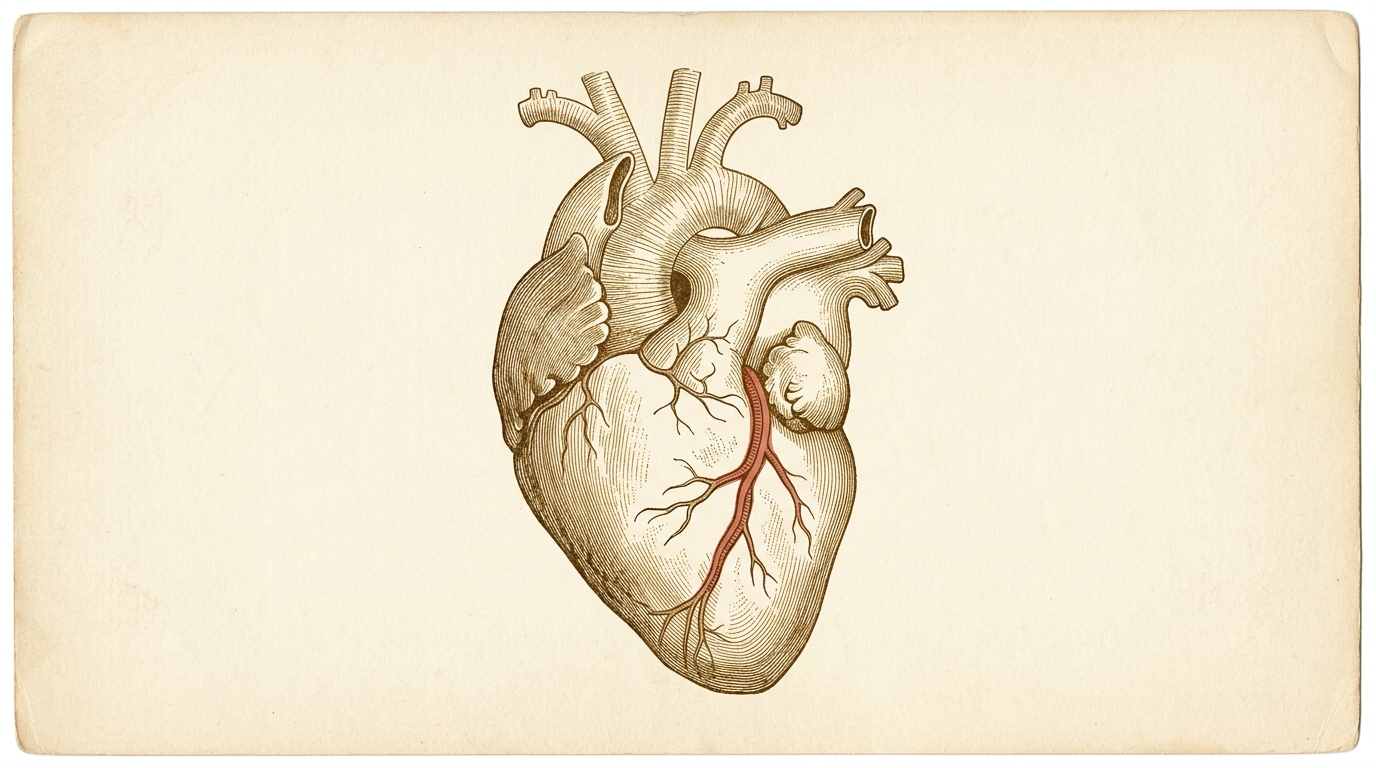
Some people are born with a broken gene — and it's the best thing that ever happened to their hearts. One faulty copy of a gene called PCSK9, and the risk of a heart attack can fall by nearly ninety percent. `F1`
02THE NAME
The gene is PCSK9, on chromosome one. `F2` Your liver makes its protein for a single, strange purpose: to hunt down and destroy the receptors that pull cholesterol back out of your blood. `F3`
03THE HUNT
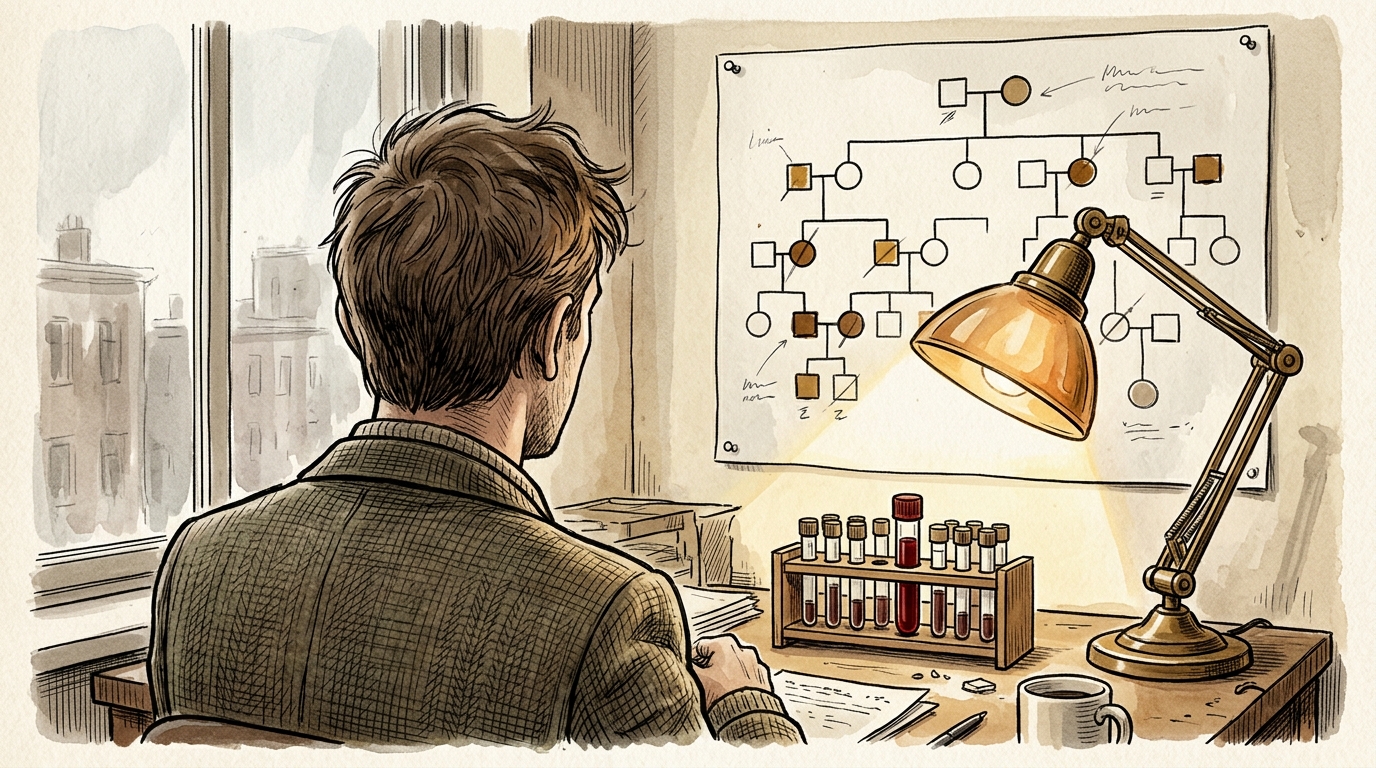
It was found twice, from opposite directions. In 2003, a team in France studying families with dangerously high cholesterol traced it to a PCSK9 that was working too hard. `F4` Three years later, in Dallas, researchers found the mirror image — people carrying a broken copy, with strikingly low cholesterol, and hearts that simply didn't get sick. `F5`
04TWO DIRECTIONS
Both clues pointed at the same protein. Turn PCSK9 up, and cholesterol floods the arteries. Switch it off, and the arteries stay clear. One gene, two directions `F4F5` — and the safe one was the broken one. `F1`
05THE MECHANISM (hero)
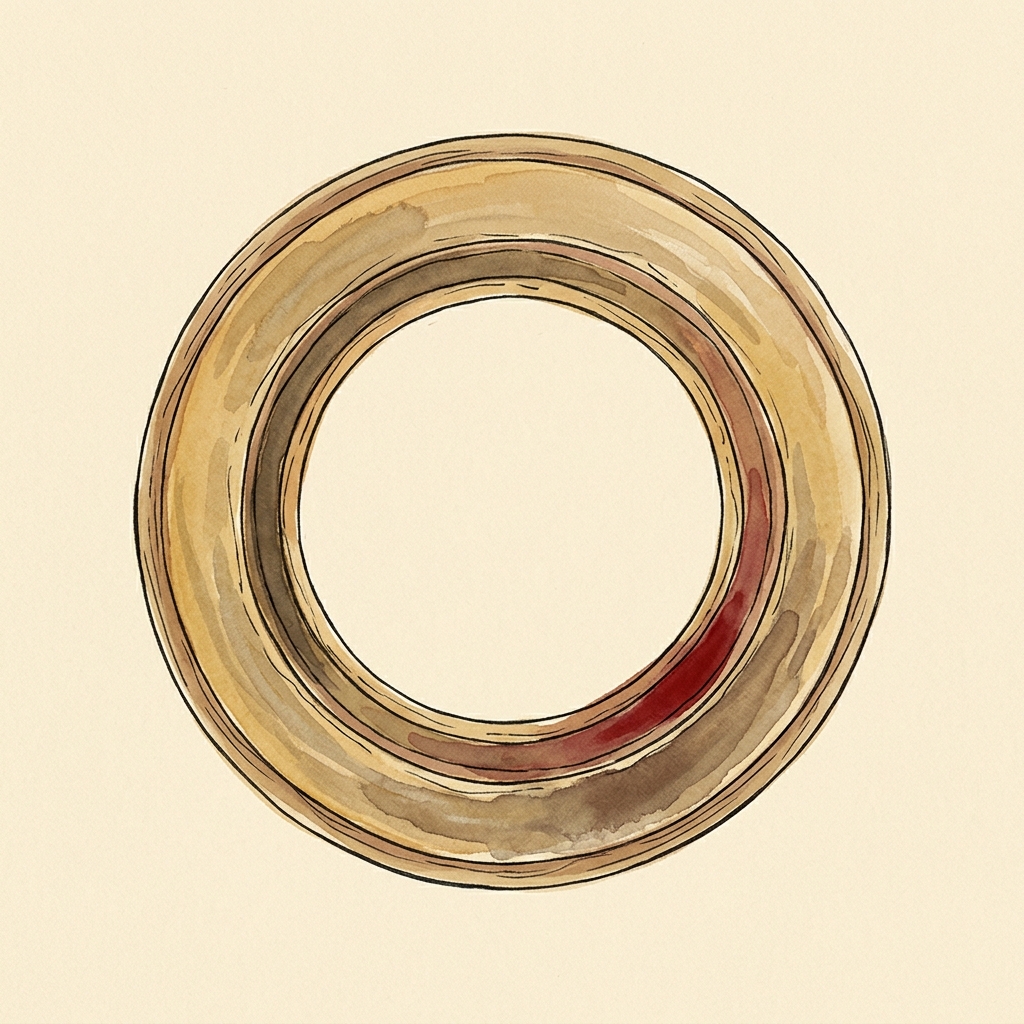
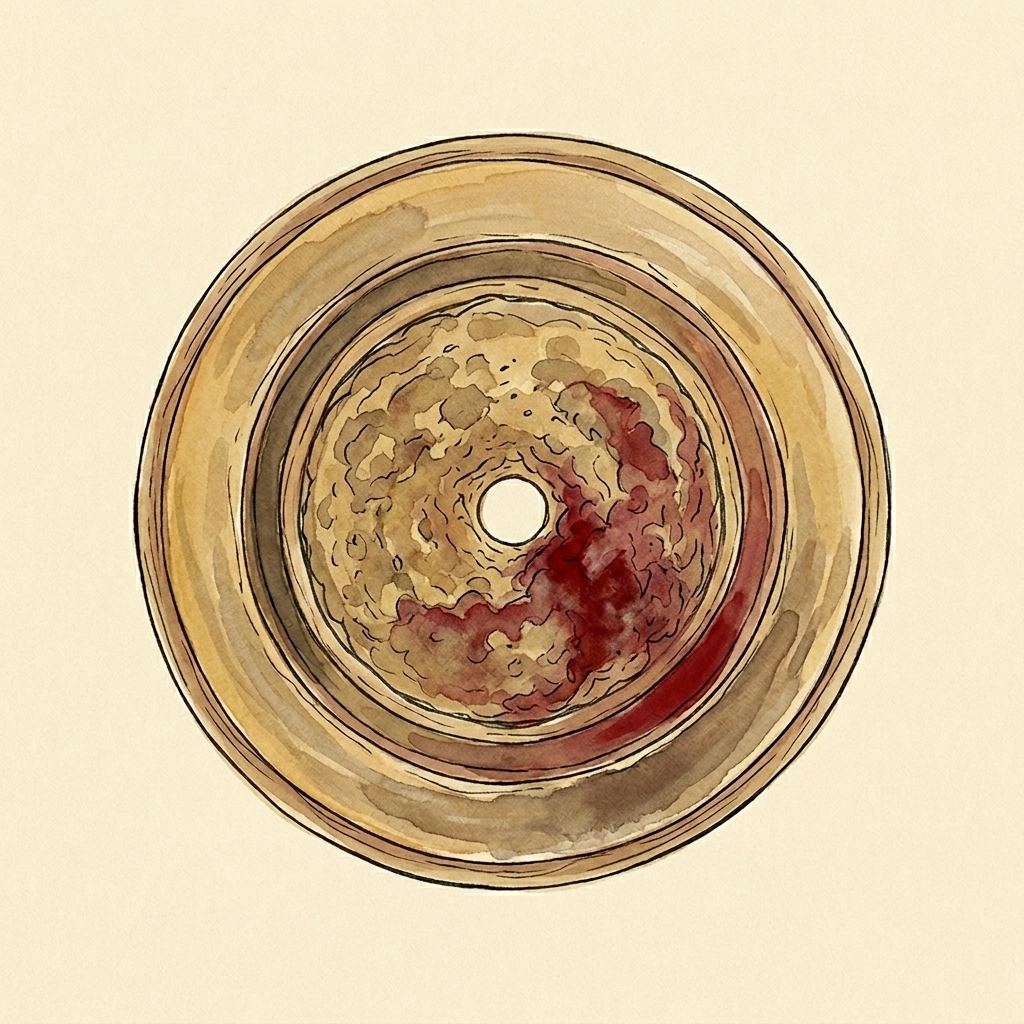
Here's why. Liver cells line their surface with receptors that grab LDL — bad cholesterol — pull it out of the blood, and then cycle back to do it again. `F3` PCSK9 sabotages that: it latches onto a receptor and drags it to the lysosome, the cell's disposal unit, to be destroyed. Fewer receptors, so more cholesterol is left in the blood. `F6` Block PCSK9, and the receptors survive — and keep clearing the blood. `F6`
06THE STAKES
Heart disease is the world's leading cause of death, and LDL cholesterol is one of its biggest drivers. `F7` So a healthy woman discovered with almost no working PCSK9 — her LDL near fourteen, a fraction of normal — wasn't a patient. She was a blueprint. `F7`
07THE CURE LADDER
If nature could switch this gene off safely, so could we. First came antibodies — injections that mop up the PCSK9 protein in the blood. `F8` Now a small-molecule version does the same job as a once-a-day pill, in trials. `F9` Another drug silences the gene's message inside the cell, with just two shots a year. `F8` And at the frontier, a single infusion that edits the gene in the liver — which in 2026 trials lowered LDL by up to sixty percent from one dose. `F10`
08TIMELINE + SIGN-OFF
From a broken gene to a new kind of medicine. Sometimes the flaw is the cure. — The Gene Channel.
The write-up
In one line: PCSK9 is a gene that destroys the receptors which clear cholesterol from your blood — so the people born with a broken copy have low cholesterol, protected hearts, and became the blueprint for a whole new class of medicine.
The gene
PCSK9 — proprotein convertase subtilisin/kexin type 9 — sits on chromosome 1p32.3. Your liver makes its protein for a single, counter-intuitive job: it hunts down the LDL receptors on the surface of liver cells — the ports that pull LDL ("bad") cholesterol back out of the blood — and marks them for destruction. More PCSK9 → fewer receptors → more cholesterol left circulating.
The hunt
The gene was found twice, from opposite directions, and the two teams should not be merged:
- 2003, France. Marianne Abifadel, Catherine Boileau and colleagues were studying families with dangerously high cholesterol (autosomal-dominant familial hypercholesterolemia). They traced it to gain-of-function mutations in PCSK9 — a gene working too hard. It was the third such cholesterol gene found, after LDLR and APOB.
- 2006, Dallas. Jonathan Cohen, Helen Hobbs and colleagues, mining the Dallas Heart Study, found the mirror image: people carrying a loss-of-function copy. Carriers of the nonsense variants Y142X / C679X had ~28% lower LDL cholesterol and ~88% lower risk of coronary heart disease. (A milder missense variant, R46L, gave ~15% lower LDL and ~47% lower risk — kept off-screen so the two number-pairs can't be confused.)
The mechanism
Liver cells fly LDL receptors to their surface to catch LDL and pull it out of the blood, then recycle those receptors and do it again. PCSK9 sabotages the loop: it grabs a receptor and escorts it to the lysosome to be degraded instead of recycled. Fewer receptors means more cholesterol stays in the blood. Remove or block PCSK9, and the receptors survive — and keep clearing the blood. That is the entire therapeutic idea, and nature had already run the experiment.
The stakes, and the frontier
Heart disease is the world's leading cause of death, and LDL cholesterol is one of its biggest modifiable drivers. So when Hobbs and Cohen described a healthy woman with essentially no working PCSK9 (a compound heterozygote), her LDL near 14 mg/dL — a fraction of normal — and otherwise well, she wasn't a patient. She was a living proof-of-concept.
If nature could switch the gene off safely, so could medicine — at three different levels:
- Antibodies that mop up the PCSK9 protein in the blood: evolocumab (Repatha) and alirocumab (Praluent), both FDA-approved in 2015.
- siRNA that silences the message inside the cell: inclisiran (Leqvio), dosed about twice a year (EU 2020 / US 2021).
- In-vivo base editing that rewrites the gene itself in liver DNA — a potential one-time treatment, currently investigational / in clinical trials, not approved.
The 2026 frontier
The field is moving fast, and two developments define this year:
- The oral pill. Merck's enlicitide decanoate (MK-0616) is an investigational once-daily oral PCSK9 inhibitor — the first to deliver antibody-grade LDL lowering (~56% vs placebo at 24 weeks in the Phase 3 CORALreef program) from a pill rather than an injection. It received an FDA National Priority Voucher (Dec 2025) for expedited review. As of June 2026 it is Phase 3-positive but not yet approved — if cleared, it would move PCSK9 inhibition from a specialty injectable into everyday primary care.
- One-and-done editing. VERVE-102 (Verve Therapeutics, now Eli Lilly) reported 2026 Phase 1b data: a single infusion that base-edits the PCSK9 gene in the liver lowered PCSK9 by up to ~88% and LDL by up to ~60%, with durable effect — the clearest sign yet that a one-time genetic treatment for high cholesterol is becoming real. Still investigational.
(The freshest actual approval in the class is lerodalcibep / LEROCHOL, a once-monthly anti-PCSK9 binding protein, FDA-approved Dec 2025 — kept off-screen to keep the cure beat to three clean levels.)
Sources
Full claim-by-claim evidence is in references.md. Primary anchors:
- Gene/locus & function: NCBI Gene 255738 · MedlinePlus: PCSK9
- Gain-of-function → disease (2003): Abifadel et al., Nat Genet 34:154-156 — PMID 12730697
- Loss-of-function → protection (2006): Cohen et al., NEJM 354:1264-72 — PMID 16554528
- Natural knockout, LDL ≈ 14: Zhao et al., Am J Hum Genet 79:514-523 — PMID 16630924
- Therapies: Repatha FDA approval, 2015 · Leqvio/inclisiran (siRNA) · In-vivo base editing, Nature 2021
- 2026 frontier: Merck enlicitide (oral PCSK9), CORALreef Phase 3 · JACC 2026 (enlicitide vs oral non-statins) · FDA National Priority Voucher, Dec 2025 · Lilly/Verve VERVE-102 base editing, 2026 · Lerodalcibep FDA approval, Dec 2025
Accuracy note: the episode is careful with three things people routinely get backwards — (1) gain-of-function raises LDL (disease); loss-of-function lowers it (protection) — breaking the gene is the good outcome; (2) the −88% / −28% figures belong specifically to the Y142X/C679X loss-of-function carriers, not to the milder R46L variant; and (3) the three therapies act at three different levels — antibody (protein), siRNA (mRNA), base editor (DNA) — and only the base editor is gene editing, and it is labeled in trials.
The evidence
Every claim, sourced
Each [F#] you hear in the film links to the source it came from. Nothing gets narrated until every one is checked and signed off.
Sign-off
- PhD sign-off — facts above are correct; the gain-vs-loss direction and the team/variant credit are stated correctly in
script.md(verified against the primary papers, 2026-06-10). - Numbers/dates verified (88%/28% welded to Y142X/C679X; LDL≈14 = Zhao 2006; approvals 2003 / 2006 / 2015 / 2020-21; base editing kept qualitative + "in trials").
- 2026 frontier verified (F9/F10, added 2026-06-10): oral pill enlicitide = Phase 3 positive + FDA priority voucher Dec 2025, investigational (not "approved"); VERVE-102 base editing = Phase 1b, single dose, on-screen LDL figure kept conservative ("up to ~60%"). Both labeled in trials in narration.
On sign-off → run `gen-narration.mjs` (the gate opens). Then assets → Video.tsx → render → `writeup.md`.
- F1
People born with one broken (loss-of-function) copy of PCSK9 have much lower LDL and up to ~88% lower risk of coronary heart disease.
Nonsense variants Y142X / C679X (frequent in Black participants, Dallas Heart / ARIC): 28% lower LDL-C → 88% lower CHD over 15 yr. (The on-screen "−88%" belongs to these LOF carriers.)
- F2
The gene is PCSK9 (proprotein convertase subtilisin/kexin type 9), on chromosome 1p32.3.
NCBI official full name = "proprotein convertase subtilisin/kexin type 9"; location 1p32.3 (GRCh38 chr1:55,039,548-55,064,852).
- F3
The protein, secreted by the liver, binds the LDL receptor and sends it to the lysosome to be destroyed, so fewer receptors clear cholesterol → higher blood LDL.
Secreted PCSK9 binds LDLR at the hepatocyte surface and escorts the complex to the lysosome, preventing LDLR recycling → less LDL clearance → higher plasma LDL-C.
- F4
It was first found from the disease side: gain-of-function PCSK9 mutations cause autosomal-dominant familial hypercholesterolemia. France, 2003.
Abifadel M, … Boileau C. "Mutations in PCSK9 cause autosomal dominant hypercholesterolemia." Nat Genet 34:154-156 (2003) — 3rd ADH gene after LDLR, APOB.
- F5
Three years later the mirror image was found in Dallas: people with a broken copy had low LDL and protected hearts.
Cohen JC, … Hobbs HH, NEJM 2006 (Dallas Heart Study). Y142X/C679X: −28% LDL / −88% CHD. (Missense R46L: −15% LDL / −47% CHD — kept off-screen to avoid mixing the pairs.)
- F6
Mechanism: liver-cell LDL receptors normally recycle and keep clearing LDL; PCSK9 diverts a receptor to the lysosome to be destroyed, so LDL piles up — block/remove PCSK9 → receptors survive → blood clears.
Same LDLR-degradation mechanism (F3); the protective LOF data (F1/F5) and the drugs (F8) are the in-human proof that lowering PCSK9 raises LDLR and lowers LDL.
- F7
A healthy woman found with almost no working PCSK9 (compound-het Y142X/ΔR97), LDL ≈ 14 mg/dL, was the living blueprint for the drugs. Heart disease is the world's leading cause of death.
Zhao Z, … Hobbs HH, Cohen JC, Am J Hum Genet 79:514-523 (2006): no immunodetectable circulating PCSK9, LDL-C 14 mg/dL, healthy/fertile. WHO: ischaemic heart disease = #1 cause of death worldwide.
- F8
Therapies that switch PCSK9 off: antibodies evolocumab (Repatha, Amgen) & alirocumab (Praluent, Sanofi/Regeneron), FDA-approved 2015; the siRNA inclisiran (Leqvio, Novartis), EU 2020 / US Dec 2021, dosed twice a year; and in-vivo gene/base editing (Verve/Lilly) now in trials — one-time, investigational, not approved.
mAbs mop up circulating PCSK9 protein; inclisiran is a GalNAc-siRNA that degrades PCSK9 mRNA; base editors switch the gene off in liver DNA.
- F9
2026 frontier — the oral pill (a different modality). Investigational once-daily oral PCSK9 inhibitors are small, orally-available drugs that block the PCSK9 protein — NOT monoclonal antibodies (a distinct modality at the same protein-blocking level). AstraZeneca's AZD0780 is a true oral small molecule (Phase 2b PURSUIT, ~51% LDL-C drop, 2025); Merck's enlicitide decanoate (MK-0616) is an oral macrocyclic peptide that met its Phase 3 targets (LDL-C −55.8% vs placebo, CORALreef) and got an FDA National Priority Voucher (Dec 19, 2025). Investigational — in trials, not approved as of June 2026.
A pill instead of an injection — and a small-molecule/oral modality, not an antibody.
- F10
2026 frontier — one-time base editing. VERVE-102 (in-vivo base editing of PCSK9 in the liver; Verve, acquired by Eli Lilly) Heart-2 Phase 1b interim (2026): a single dose lowered PCSK9 by up to 88% and LDL-C by up to ~62%, with durable effect. Investigational. On-screen used the conservative LDL figure ("up to ~60% from one dose").
A potential one-and-done treatment — gene editing as durable cholesterol control.