BRCA
The Genes You Own
Two genes everybody carries — and a company that tried to own them. From Mary-Claire King proving cancer can run in families to a 9–0 Supreme Court ruling that struck the patents down.
The walkthrough
Beat by beat
HOOK
0:21
01HOOK
You carry two genes whose entire job is to stop cancer before it starts `F1`. Everyone does. They're not cancer genes — they're repair genes `F1`. And for the better part of two decades, in the United States, one company claimed to legally own them `F2`. This is the story of BRCA1 and BRCA2.
02THE NAME
The names are short for BReast CAncer: BRCA1, on chromosome 17 `F3`, and BRCA2, on chromosome 13 `F4`. But the names mislead. In a healthy body these are tumor suppressors — caretakers that fix broken DNA and keep a cell from turning cancerous `F5`. The danger isn't having them. It's inheriting a copy that doesn't work.
03THE HUNT I
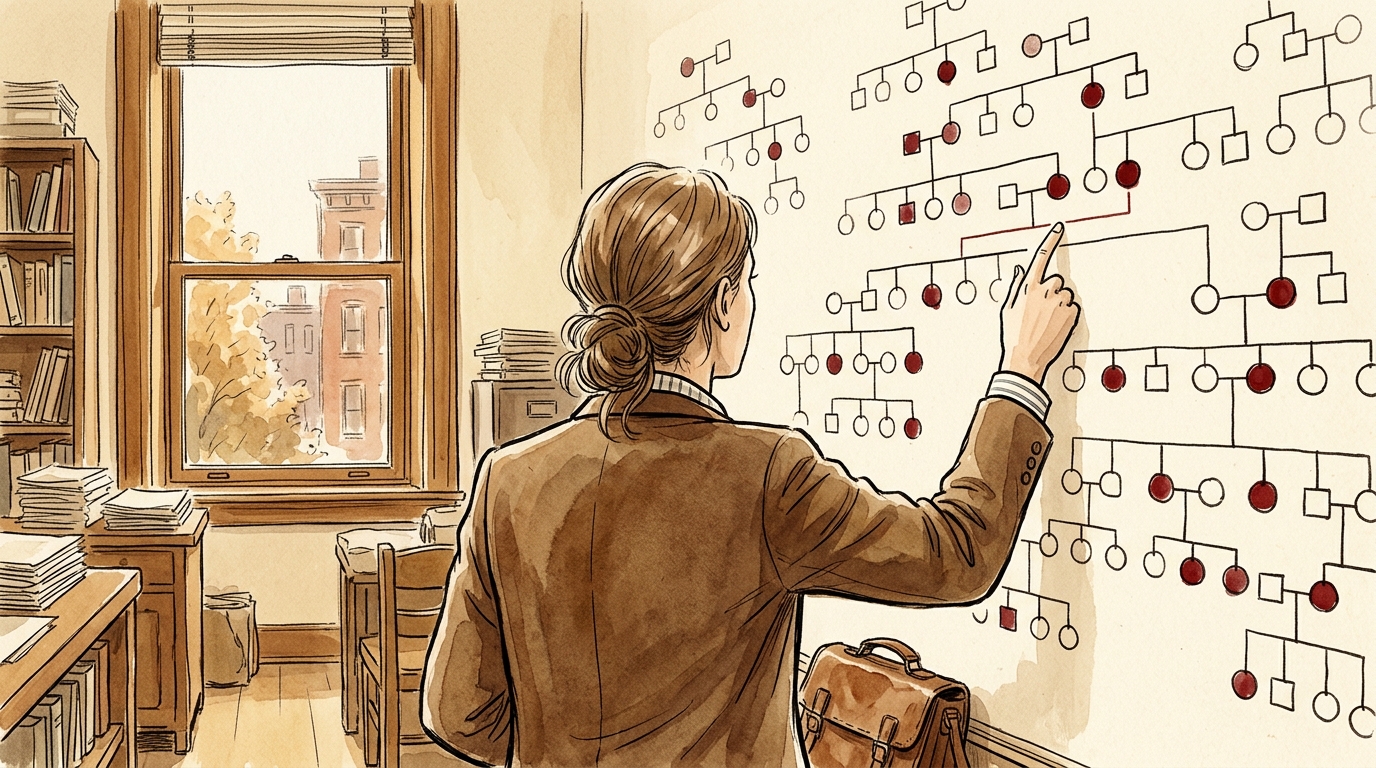
For most of the twentieth century, breast cancer was thought to be bad luck — environment, not heredity `F6`. Then, in 1990, geneticist Mary-Claire King ended that argument `F7`. Tracing huge families, she proved a single inherited gene on chromosome 17 drove early-onset breast cancer, and she gave it a name: BRCA1 `F7`. She had found where the gene was — not yet the gene itself.
04THE HUNT II
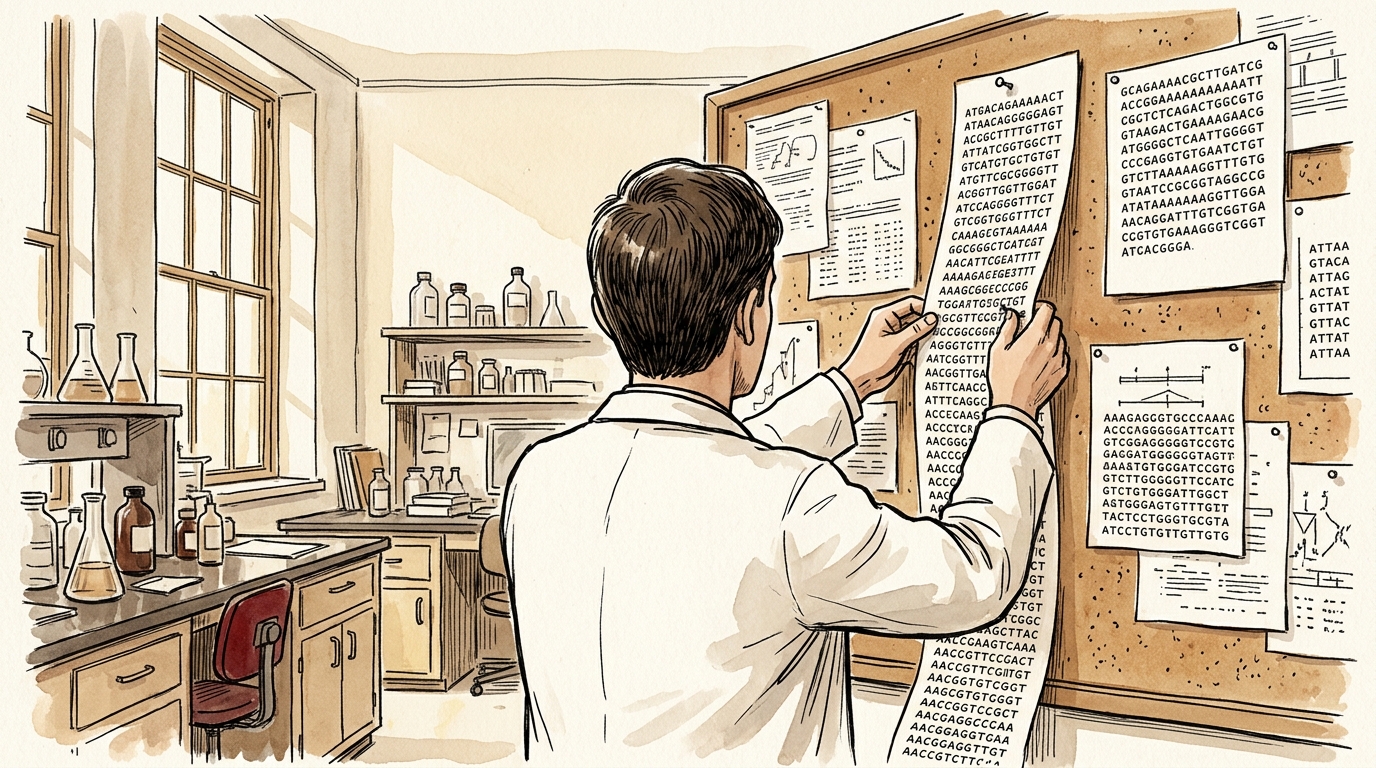
Knowing a gene's neighborhood is not the same as holding the gene. What followed was a four-year international race to clone it. In 1994, a team led by Mark Skolnick at a young company, Myriad Genetics, crossed the line first — pinning down the actual sequence of BRCA1 `F8`.
05THE HUNT III
But one gene didn't explain every family. A year later, in 1995, a British team led by Michael Stratton at the Institute of Cancer Research found the second gene — BRCA2, on chromosome 13 — and published its sequence openly, for anyone to use `F9`. Two genes, three teams, five years. The hunt was over. The fight was just beginning.
06THE MECHANISM (hero)
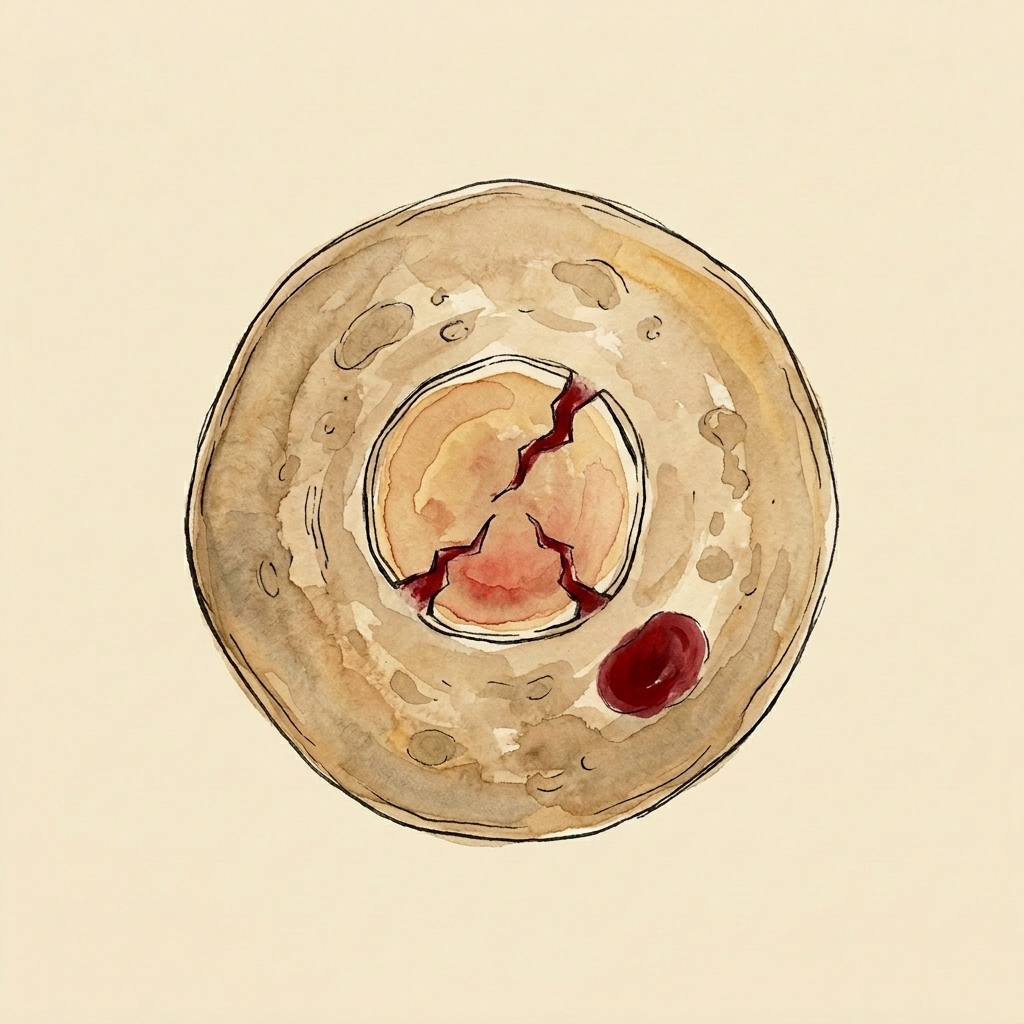
Here is why a broken repair gene is so dangerous. Every day, the strands of your DNA snap — clean double-strand breaks `F10`. BRCA1 and BRCA2 run the precise repair crew: BRCA2 loads a protein called RAD51 onto the broken ends, which copies the matching, undamaged strand to mend the break exactly `F11`. It's error-free repair `F11`. Lose it, and the cell must patch breaks the sloppy way — and mistakes accumulate.
07THE MECHANISM II
This is why the risk runs in families `F12`. You inherit two copies of each gene. A carrier is born with one already faulty — but the second, working copy still does the job. Cancer begins when a single breast or ovary cell happens to lose that second copy too `F12`. With no working repair crew left, that one cell's DNA destabilizes — and a tumor can grow `F13`.
08THE CONTROVERSY I
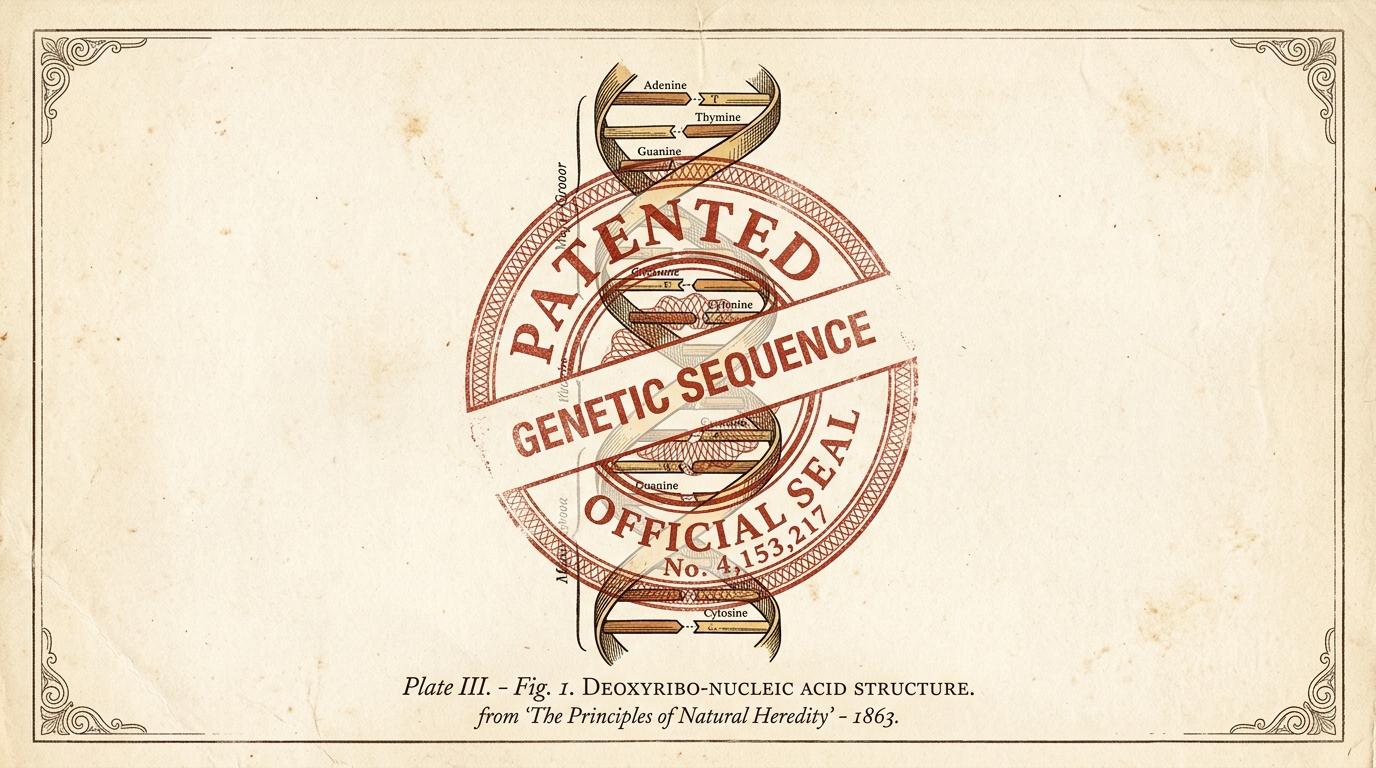
Now the science collides with the law. Myriad didn't just patent its test — it patented the genes themselves `F14`. And with BRCA2, the move was sharper still: Michael Stratton's team had already published the sequence in the open — and Myriad raced to file its own patent on it anyway `F15`.
09THE CONTROVERSY II
Those patents made Myriad the only place in America you could be tested for a BRCA mutation `F16`. The test ran around three thousand dollars `F16`. And because no other lab was allowed to look, there was no way to get a second opinion — on the sequence of your own DNA `F16`.
10THE RECKONING
In 2013, it reached the Supreme Court `F17`. The ruling was unanimous: a naturally occurring gene is a product of nature — you cannot patent it `F17`. Within hours, competing labs announced their own BRCA tests, and the price began to fall `F18`. Your genes belonged to you again.
11THE STAKES
Today a BRCA test is routine — and it carries weight. A woman who inherits a faulty BRCA1 gene can face up to a roughly seventy percent chance of breast cancer in her lifetime `F19`. In 2013, the actress Angelina Jolie revealed she carried such a mutation and had chosen preventive surgery — and testing surged worldwide `F20`. Because knowing early is the whole point: it turns a hidden risk into a choice — screening, surgery, time `F20`.
12THE OPEN THREAD
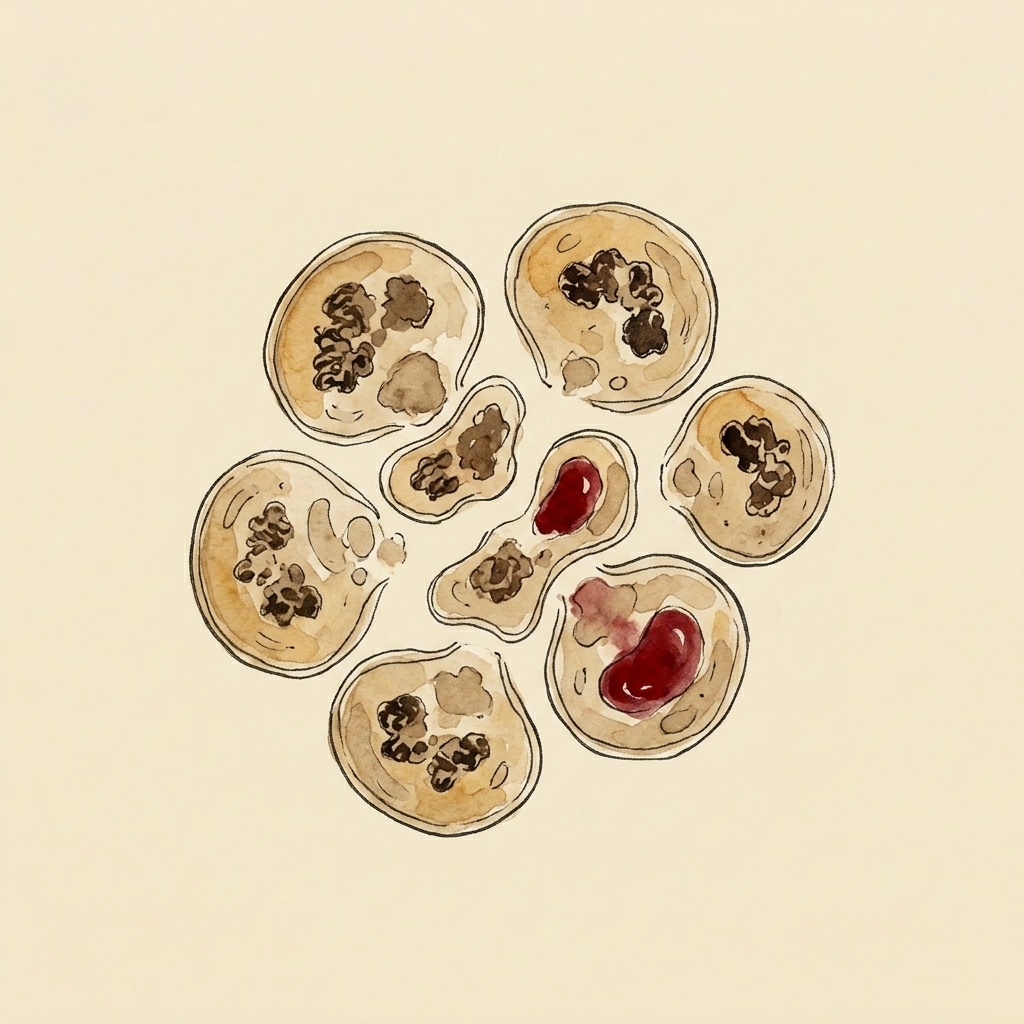
And there's a final twist. The broken repair gene becomes the tumor's weakness `F21`. Block a second repair enzyme — PARP — and a healthy cell shrugs, because its BRCA crew still works. But a BRCA-mutant cancer cell, already missing one repair route, now has none — and it dies `F21`. The first of these drugs was approved in 2014 `F22`. The very flaw that caused the cancer is now how we attack it.
13TIMELINE + SIGN-OFF
A locus in 1990. Two genes by 1995. A courtroom in 2013. And today, a test that lets people see a cancer coming before it arrives. From "you can't inherit breast cancer" to "you can read the odds in your own code." — The Gene Channel.
The write-up
In one line: BRCA1 and BRCA2 are not "cancer genes" but the body's DNA-repair caretakers — and their story runs from Mary-Claire King proving breast cancer can be inherited, through a four-year race to clone them, to a company that patented the genes themselves, to the Supreme Court ruling that you cannot own a piece of nature.
The genes
BRCA1 sits on chromosome 17 (band 17q21.31); BRCA2 sits on chromosome 13 (band 13q13.1). The names are short for BReast CAncer 1 and 2, but the label misleads: in a healthy body these are tumor suppressors — caretakers whose job is to repair broken DNA and keep a cell from turning cancerous. Everyone carries them. The danger isn't having a BRCA gene; it's inheriting a copy that doesn't work.
The hunt — and the race
For most of the twentieth century, breast cancer was widely treated as bad luck — environment, not heredity. In 1990, geneticist Mary-Claire King (then at Berkeley) ended that argument: by tracing large families and using linkage analysis, she mapped early-onset familial breast cancer to a region of chromosome 17q21 and named the locus BRCA1. Crucially, she had found where the gene lived — not yet the gene itself.
Locating a gene's neighborhood is not the same as holding the gene, and what followed was a four-year international race to clone it. In 1994, a team led by Mark Skolnick at a young company, Myriad Genetics (with academic collaborators), crossed the line first, reporting the actual sequence of BRCA1 in Science (Miki et al.). One gene didn't explain every family, though: a year later, in 1995, a British team led by Michael Stratton at the Institute of Cancer Research identified the second gene, BRCA2, on chromosome 13 (Wooster et al., Nature) — and published its sequence in the open.
The mechanism
Why is a broken repair gene so dangerous? Every day, the double helix of your DNA suffers double-strand breaks. BRCA1 and BRCA2 run the cell's most precise repair pathway, homologous recombination: BRCA2 loads the recombinase RAD51 onto the resected broken ends, which then copies the matching, undamaged sister strand to mend the break exactly — error-free. Lose that crew, and the cell must fall back on sloppier repair, and mutations accumulate.
This is also why the risk runs in families (the Knudson two-hit model). You inherit two copies of each gene. A carrier is born with one copy already faulty; the second, working copy still does the job — until a single breast or ovary cell happens to lose that second copy too. With no working repair left, that cell's genome destabilizes, and a tumor can grow.
The patent — and the courtroom
Here the science collided with the law. Myriad didn't just patent its test — it held patents on the isolated genes themselves. With BRCA2, the move was sharper: Stratton's team had already published the sequence openly, and Myriad raced to file its own patent on it anyway (while the UK's Cancer Research Campaign secured the UK patent and kept access open in Europe).
Those patents made Myriad the only place in the United States you could be tested for a BRCA mutation. The BRACAnalysis test ran around $3,000, and because no other lab was permitted to look, there was no way to get a second opinion on the sequence of your own DNA. The ACLU and the Public Patent Foundation sued. In June 2013, in Association for Molecular Pathology v. Myriad Genetics, the Supreme Court ruled 9–0 that a naturally occurring, isolated DNA sequence is a product of nature and cannot be patented (synthetic cDNA, being man-made, can be). Within hours, rival labs announced their own BRCA tests, and prices fell.
The stakes — and the testing era
Today a BRCA test is routine, and it carries real weight. The largest prospective study (Kuchenbaecker et al., JAMA 2017) put a BRCA1 carrier's cumulative breast-cancer risk to age 80 at about 72% (BRCA2 ~69%), with ovarian-cancer risk near 44% (BRCA1) and 17% (BRCA2). In May 2013, the actress Angelina Jolie revealed in a New York Times op-ed that she carried a BRCA1 mutation and had chosen a preventive double mastectomy — triggering the measurable, lasting "Angelina Jolie effect" of increased testing and awareness. Knowing early turns a hidden risk into a set of choices: enhanced screening, risk-reducing surgery, time.
The frontier
The most elegant twist is therapeutic. A BRCA-mutant cancer cell has already lost one DNA-repair route, so it leans heavily on a backup enzyme, PARP. Block PARP with a drug and a healthy cell shrugs (its BRCA crew still works), but the BRCA-mutant cancer cell — now with no repair route left — dies. This synthetic lethality turns the tumor's own defect into its weakness. The first PARP inhibitor, olaparib (Lynparza), was FDA-approved in December 2014 for BRCA-mutated advanced ovarian cancer. The very flaw that causes the cancer is now how we attack it.
Sources
Full claim-by-claim evidence is in references.md. Primary anchors:
- Hall, King et al. (1990) — Linkage of early-onset familial breast cancer to chromosome 17q21. Science 250, 1684–1689. (BRCA1 located)
- Miki et al. (1994) — A strong candidate for the breast and ovarian cancer susceptibility gene BRCA1. Science 266, 66–71. (BRCA1 cloned, Myriad/Skolnick)
- Wooster et al. (1995) — Identification of the breast cancer susceptibility gene BRCA2. Nature 378, 789–792. (BRCA2, ICR/Stratton)
- Association for Molecular Pathology v. Myriad Genetics, Inc., 569 U.S. 576 (2013) — the unanimous gene-patent ruling.
- Kuchenbaecker et al. (2017) — Risks of breast, ovarian, and contralateral breast cancer for BRCA1 and BRCA2 mutation carriers. JAMA 317, 2402–2416.
- FDA / AstraZeneca (Dec 2014) — olaparib (Lynparza) approval; synthetic lethality (Farmer et al., Bryant et al., Nature 2005).
Accuracy note: The episode carefully separates two contributions that are often blurred: Mary-Claire King (1990) located and named BRCA1 by linkage; she did not clone it — Myriad/Skolnick (1994) won the race to sequence it. On the patent, the holding is precise: naturally occurring isolated DNA is not patentable, but cDNA is. Risk figures are stated qualitatively in narration ("up to ~70%"); exact cohort estimates (72%/69% breast; 44%/17% ovarian) are recorded here and in references.md.
The evidence
Every claim, sourced
Each [F#] you hear in the film links to the source it came from. Nothing gets narrated until every one is checked and signed off.
Sign-off
- PhD sign-off — facts above verified against primary/authoritative sources; the ⚠️ traps are stated
- Numbers kept qualitative where prudent: lifetime risk narrated as "up to ~70 percent" (Kuchenbaecker 72% BRCA1 to age 80); test price as "around three thousand dollars" (BRACAnalysis ~$3,340).
- Loci accepted as current NCBI/GRCh38: BRCA1 17q21.31, BRCA2 13q13.1.
**Gate OPEN** → narration + render may proceed **once the user signs off on the extended (~4 min) runtime** (length gate, step 5).
- F1⚠ commonly confused
BRCA1/BRCA2 are tumor-suppressor / DNA-repair genes everyone carries — not "cancer genes." Their normal job is to prevent cancer; the loss-of-function variant raises risk
"BRCA1 and BRCA2 are human genes that produce tumor suppressor proteins. These proteins help repair damaged DNA… When either of these genes is mutated… DNA damage may not be repaired properly." Present in all people
- F2
For ~the better part of two decades, Myriad held US patents covering the BRCA1/BRCA2 genes (filed mid-1990s, invalidated 2013)
Myriad was "awarded patents on the BRCA1 and BRCA2 genes in the 1990s"; the patents were invalidated by the Supreme Court June 13 2013
- F3
BRCA1 is on chromosome 17 (cytogenetic 17q21.31)
NCBI Gene: BRCA1 (Gene ID 672), location 17q21.31
- F4
BRCA2 is on chromosome 13 (cytogenetic 13q13.1)
NCBI Gene: BRCA2 (Gene ID 675), location 13q13.1
- F5
"BReast CAncer"; both are tumor suppressors that fix broken DNA / keep cells from becoming cancerous
Names = BReast CAncer gene 1/2; both encode tumor-suppressor proteins involved in DNA repair (see F1)
- F6
Before 1990 breast cancer was widely viewed as non-hereditary (environment/sporadic); inheritance was contested
King's linkage proof "ended the argument" that a single gene could drive inherited breast cancer; her work established heritable susceptibility
- F7⚠ commonly confused
1990, Mary-Claire King (Hall et al.) used linkage analysis to map early-onset familial breast cancer to chromosome 17q21 and named the locus BRCA1 — she located it; she did not clone the gene
Hall, Lee, Newman, Morrow, Anderson, Huey, King. "Linkage of early-onset familial breast cancer to chromosome 17q21." Science 250(4988):1684–1689 (1990)
- F8⚠ commonly confused
1994, Mark Skolnick / Myriad Genetics-led team cloned/sequenced BRCA1 (positional cloning), winning a multi-year race
Miki Y, et al. "A strong candidate for the breast and ovarian cancer susceptibility gene BRCA1." Science 266(5182):66–71 (Oct 7 1994); Skolnick/Myriad-led
- F9⚠ commonly confused
1995, Michael Stratton (Wooster et al.), Institute of Cancer Research, identified BRCA2 on chromosome 13 and published the sequence openly
Wooster R, et al. "Identification of the breast cancer susceptibility gene BRCA2." Nature 378(6559):789–792 (Dec 1995); ICR team; mapped to 13q12-13 (Wooster 1994, Science)
- F10
DNA double-strand breaks (DSBs) occur routinely and are a threat to genome stability
"DNA double-strand breaks (DSBs) are toxic lesions that are a threat to genome stability"
- F11
BRCA1/2 repair DSBs by homologous recombination (error-free); BRCA2 loads RAD51 onto the broken ends to copy the intact sister strand
"BRCA2 facilitates the polymerization of RAD51 onto ssDNA to form a presynaptic nucleoprotein filament" which invades the homologous strand; HR is "largely an error-free pathway"
- F12⚠ commonly confused
Two-hit model: carriers inherit one faulty + one working copy; cancer needs loss of the second (working) allele in a cell — why it runs in families
Hereditary BRCA cancers follow Knudson two-hit / loss of heterozygosity: germline mutation + somatic loss of wild-type allele
- F13
Loss of BRCA function → genomic instability → tumor growth
"mutations in HR genes, such as BRCA1 and BRCA2, lead to a genomic instability phenotype that promotes breast, ovarian, and other cancer types"
- F14⚠ commonly confused
Myriad patented the isolated genes themselves (not merely a method/test)
The patents claimed isolated BRCA1/BRCA2 DNA; this gene-level claim is exactly what the Supreme Court struck down
- F15⚠ commonly confused
For BRCA2, Stratton's ICR team published the sequence openly (Dec 1995); Myriad announced its own sequencing, deposited it to GenBank, and filed a US patent the same month
"In December 1995, Myriad announced that it had sequenced the BRCA2 gene, filed a patent for it…"; UK group (Cancer Research Campaign) published first and held the UK patent
- F16⚠ commonly confused
The patents made Myriad the sole US provider of BRCA testing (~$3,000+), with no possibility of an independent second opinion
"Myriad made the only U.S. test… costing roughly $3,000"; patents "shut down other labs from offering testing or second opinions"; BRACAnalysis priced ~$3,340 (rose to ~$4,100 with BART)
- F17
June 13 2013, the US Supreme Court ruled 9–0 (Thomas, J.) that naturally occurring isolated DNA is a product of nature and not patent-eligible (cDNA is)
Association for Molecular Pathology v. Myriad Genetics, Inc., 569 U.S. 576 (2013); unanimous
- F18
After the ruling, competing labs entered and BRCA test prices fell
Multiple labs (e.g. Ambry, GeneDx, others) announced BRCA testing within hours/days of the decision; prices dropped; "may reduce cost of genetic testing"
- F19⚠ commonly confused
A BRCA1 carrier's cumulative breast-cancer risk to age 80 is ~72% ("up to ~70%"); BRCA2 ~69%; ovarian ~44% (BRCA1) / ~17% (BRCA2). Narration kept qualitative ("up to ~70 percent")
Kuchenbaecker KB, et al. JAMA 317(23):2402–2416 (2017): breast-cancer cumulative risk to 80 = 72% (BRCA1), 69% (BRCA2); ovarian 44% / 17%
- F20
May 2013: Angelina Jolie (BRCA1 carrier) disclosed her preventive double mastectomy in a NYT op-ed; an "Angelina Jolie effect" — measurable surge in BRCA testing — followed
Jolie, "My Medical Choice," NYT May 14 2013; documented spike in genetic testing/screening afterward
- F21
PARP inhibitors exploit synthetic lethality: a BRCA-mutant cell (HR-deficient) dies when PARP-mediated repair is also blocked, while normal cells survive
"cancer cells with one DNA repair pathway out of action as a result of a BRCA mutation are particularly susceptible to blocking… using a PARP inhibitor"
- F22
First PARP inhibitor (olaparib / Lynparza) FDA-approved Dec 19 2014 for germline BRCA-mutated advanced ovarian cancer
"On December 19, 2014, the FDA approved olaparib… for… germline BRCA-mutated advanced ovarian cancer"