AUTS2
The gene that outgrew its name
Found broken in a pair of identical twins with autism, and named for it — yet most people who carry a broken copy aren't autistic at all. Meet one of your largest genes: a developmental switch in the growing brain.
The walkthrough
Beat by beat
HOOK
0:22
01HOOK
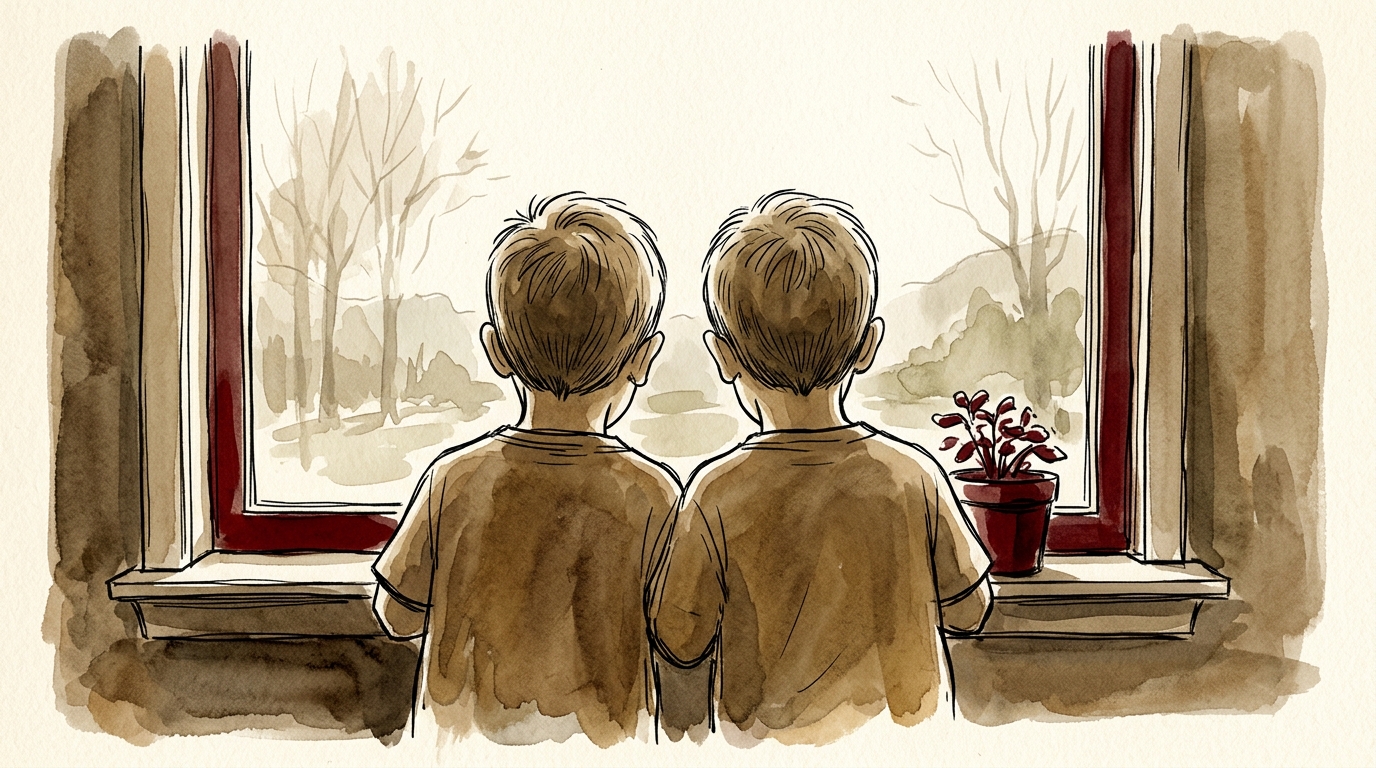
In 2002, a gene turned up broken in two identical twins. Both had autism. So they named it for autism itself — autism susceptibility candidate two `F1`. But follow that same gene to the other children who carry it, and the name starts to slip. Most of them aren't autistic at all `F2`.
02THE GENE
The gene sits on the seventh chromosome `F3`. And it is enormous — more than a million letters of DNA, one of the largest genes we carry `F4`. Nineteen pieces, switched on hardest while the brain is still being built `F4F5`. Its name is AUTS2.
03THE HUNT
Nobody was looking for it. Two identical twins came in with autism, and a picture of their chromosomes showed a break — a piece of chromosome seven traded onto chromosome twenty `F6`. The break cut straight through a gene no one had named `F6`. Five years later, the same gene turned up broken again. This time in children with intellectual disability, and no autism at all `F7`. The gene was doing more than its name promised.
04GENETIC TESTING
How do you catch a broken gene this big? For years, one test did the work — the chromosomal microarray, reading a whole genome for missing pieces `F9`. It is how most people with AUTS2 were first found: a deletion, whole exons simply gone `F9`. But the microarray is blind to the smallest errors. A single changed letter slips right past it `F9`. Now sequencing reads the gene letter by letter, and those hidden variants surface too `F9`.
05THE MECHANISM I (hero)
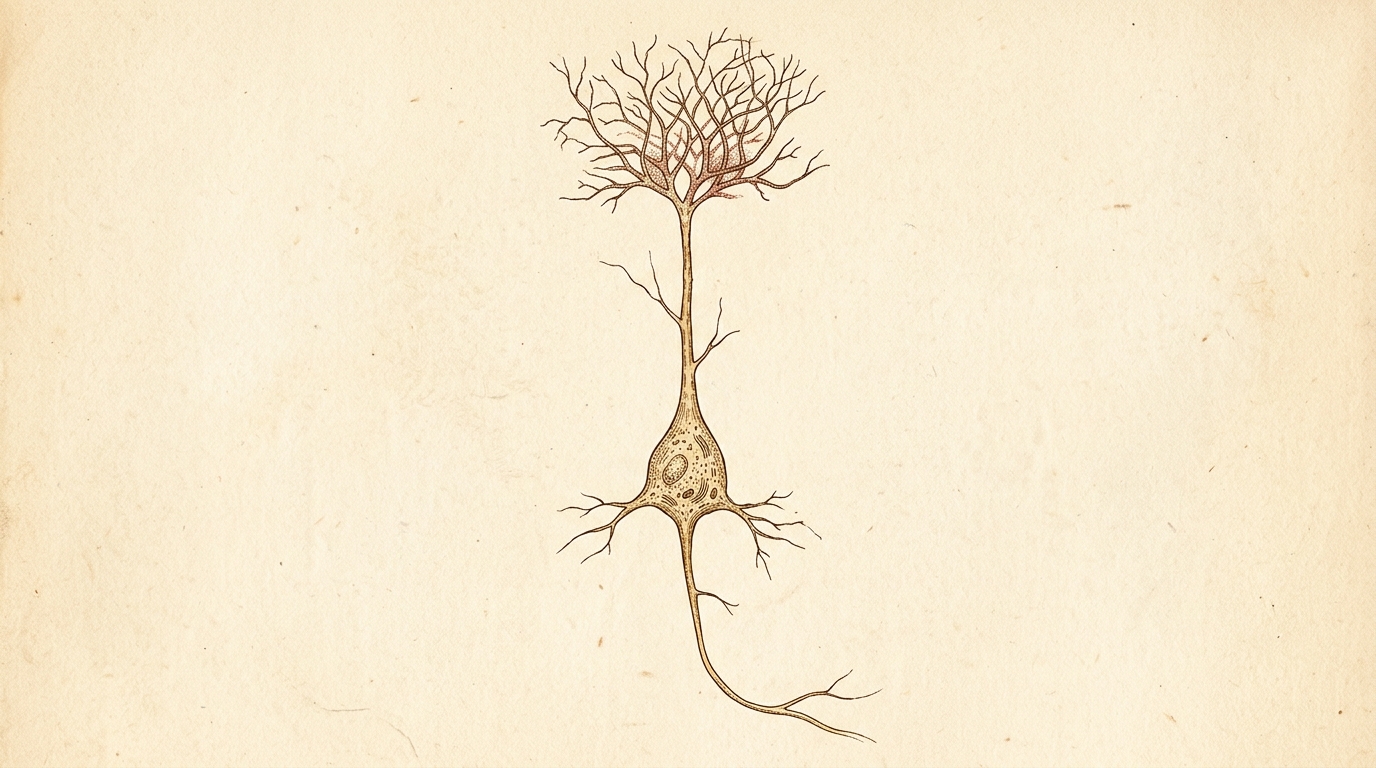
So what does the gene actually do? Deep in a young neuron, its protein takes a seat on the DNA — joining a complex whose usual job is to hold genes shut `F10`. Polycomb. The silencer. But when AUTS2 joins, the switch flips. The complex that kept genes off now turns them on `F10`. And the genes it wakes are the ones that build a brain `F10`.
06THE MECHANISM II
But the protein doesn't only work in the nucleus. It also slips out into the cytoplasm — the body of the cell — and there it turns into a guide. It steers each newborn neuron to its place in the cortex, then pushes out the branches that will wire them together `F11`. All of it timed to the moment the brain takes shape. Two working copies of the gene run this program. Lose one, and there isn't enough to finish the job `F12`.
07THE STAKES
That 2013 study never recruited a single patient. It reached into records that already existed — nearly fifty thousand people who had come to genetics clinics with developmental problems, each already scanned by microarray, pooled across ten centres in five countries `F8`. None were tested for AUTS2. It just asked: in all those genomes, do deletions in AUTS2 show up more than chance? Against healthy controls, they did — coding deletions, in two dozen patients, and none of the controls `F8`. Only then did the syndrome come into focus. AUTS2 syndrome `F8`. The picture is consistent. Development runs slow. Speech comes late, or never `F13`. The head grows a little small; feeding is hard from the start `F13`. And yet the same note keeps recurring. These children are warm, sociable, quick to smile `F13`. It is rare. Around sixty have been described in the medical literature `F14`. Almost certainly, there are many more.
08THERAPY & EARLY INTERVENTION
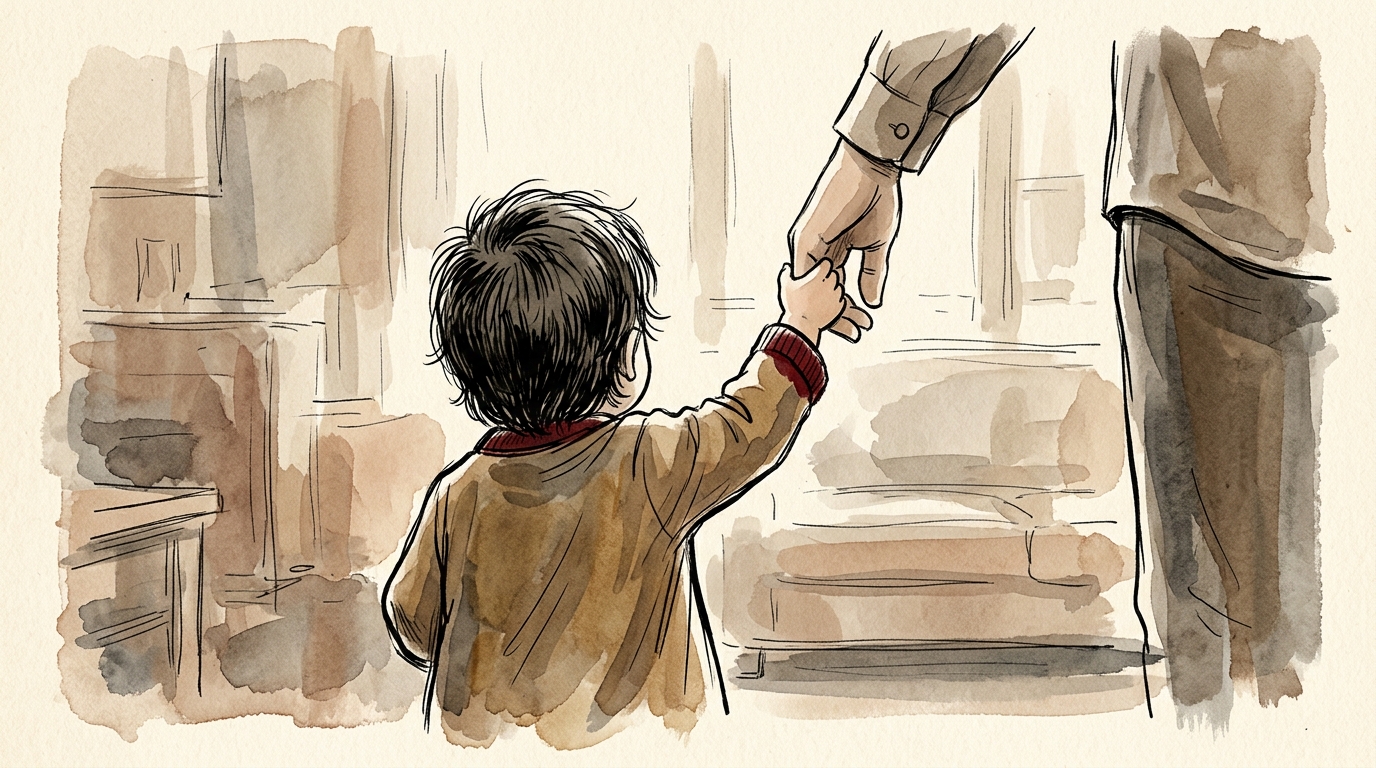
There is no drug for AUTS2. No edit that puts the missing copy back `F15`. What helps is time, used well. Speech therapy. Occupational therapy. Physical therapy. Care aimed at each symptom as it appears `F15`. None of it targets the gene. But begun early, while the young brain is still plastic, it can bend the whole course of a childhood `F16`. Which is why the diagnosis matters — it opens the door to that help, sooner `F16`. And in the lab, the first molecular clues are surfacing. For years the work was in zebrafish and mice, mapping what the gene builds, and what breaks without it `F17`. Now there are human brain organoids: grow one from a patient's cells, and a single signal, called Wnt, runs too hot. Dial it back down, and the young neurons develop closer to normal `F18`. A hint, in a dish. Not yet a treatment `F18`.
09TIMELINE + SIGN-OFF
From two twins, to a syndrome with a name. From a name about autism, to a gene that helps build the brain `F1F10`. We know what it does now. We are still learning how to help. — The Gene Channel.
The write-up
In one line: AUTS2 was found broken in a pair of identical twins with autism and named for it — yet most people who carry a broken copy are not autistic. It is one of the largest genes we have, a developmental switch in the growing brain: in the nucleus it flips a Polycomb complex from off to on; in the cytoplasm it steers young neurons into place. Lose one working copy and the brain is built a little short — the rare condition now called AUTS2 syndrome. There is no drug for it; early therapy is the real lever, and the first molecular clues are only now appearing in a dish.
The gene
AUTS2 sits on the long arm of chromosome 7, at band 7q11.22. It is enormous — spanning roughly 1.2 million base pairs (about 1,195,032 bp) across 19 exons, which makes it one of the largest genes in the human genome. Its expression peaks while the brain is still under construction: in the developing (largely prenatal) neocortex, hippocampus, and cerebellum — the regions that carry higher cognition.
The name is a fossil of how it was found. "AUTS2" originally stood for autism susceptibility candidate 2, a label earned purely by where the gene was sitting when it was first noticed — not by any proven role as a major autism gene. The HGNC has since re-expanded the same symbol to Activator of Transcription and Developmental Regulator, which fits the biology far better.
The hunt (a broken gene, found twice)
In 2002, Sultana and colleagues were studying a pair of monozygotic (identical) twins, both diagnosed with autism. A picture of their chromosomes showed a balanced translocation, t(7;20) — a swap between chromosomes 7 and 20 — and its breakpoint fell squarely inside a gene no one had described. They named it AUTS2. Because it was interrupted at a breakpoint in two children with autism, the "autism candidate" label stuck.
Five years later the label began to slip. Kalscheuer and colleagues (2007) reported patients whose AUTS2 was disrupted by translocations who had intellectual disability rather than autism, widening the phenotype well beyond the original diagnosis.
The condition came into focus in 2013, and it is worth being precise about how — because the study is often misremembered as an "AUTS2 study." It was not. Beunders and colleagues never recruited an AUTS2 cohort. They pooled the results of routine diagnostic microarray (array-CGH) testing on 49,684 people who had come to genetics clinics with intellectual disability or congenital anomalies — a pool assembled across ten diagnostic centres in five countries. None had been tested for AUTS2. The researchers simply asked whether deletions hitting AUTS2 turned up more often than chance: they found 24 coding (exonic) AUTS2 deletions in the cases versus zero in 16,784 healthy controls (p = 0.00092). Only then, by clinically characterising 21 individuals from 17 families, did a single recognisable disorder emerge — AUTS2 syndrome — along with the observation that deletions toward the 3′ / C-terminal end of the gene tend to be more severe.
Genetic testing (why microarray came first)
That history is baked into how the syndrome is diagnosed. For years the workhorse was the chromosomal microarray, which reads a whole genome for missing or extra chunks — and it is how most AUTS2 cases were first caught, as deletions of whole exons. Its blind spot is the smallest error: a single changed letter passes straight through a copy-number test. As exome and genome sequencing have become routine, that blind spot has closed, and point mutations and small frameshifts in AUTS2 are now being found too.
The mechanism (one protein, two jobs)
AUTS2 is not an enzyme with a single reaction; it is a regulator with two addresses.
In the nucleus, AUTS2 joins a Polycomb repressive complex 1 (PRC1) — machinery whose usual job is to keep genes silenced. When AUTS2 is part of the complex, the logic inverts: PRC1-AUTS2 activates transcription instead of repressing it (Gao et al., 2014). It does this two ways at once — its partner CK2 disables PRC1's repressive activity, while AUTS2 recruits the co-activator P300 — and the genes it switches on are neurodevelopmental ones. A silencer, turned into a starter.
In the cytoplasm, the same protein does something entirely different. It acts as a guide for young neurons, activating the small GTPase Rac1 (through the P-Rex1 and Elmo2/Dock180 exchange factors) to drive neuronal migration — steering newborn neurons to their layer in the cortex — and neurite/dendrite outgrowth, the branching that wires neurons to one another (Hori et al., 2014).
Because both jobs are dose-sensitive, AUTS2 syndrome is a haploinsufficiency disorder: it is caused by losing one working copy (a de novo deletion or truncating variant), not by a poison-producing mutant copy. Two copies run the developmental program on schedule; one is not enough to finish it.
The stakes
The clinical picture is consistent enough to be recognisable. Developmental delay or intellectual disability is near-universal (~98%). Speech is delayed, sometimes absent. Microcephaly (a smaller head, ~65%) and feeding difficulties (~62%) are common, alongside short stature and characteristic facial features. ADHD (~54%) is at least as common as autistic traits (~52%) — a reminder that the gene's name oversells the autism link — while seizures are uncommon (~7%). And running through nearly every case report is the same striking note: these children are described as warm, sociable, and quick to smile.
It is a rare condition — around sixty patients have been described in the medical literature — though because microarray was the historic tool and sequencing is recent, the true number of affected people is almost certainly higher.
Therapy and the frontier
The honest state of care is that there is no drug for AUTS2 and no way to put the missing copy back. Management is supportive and multidisciplinary: speech-language therapy, occupational therapy, physical therapy, special education, and behavioural support, plus treatment aimed at individual symptoms. None of it targets the gene. What it has going for it is timing — begun early, while the young brain is still plastic, developmental therapy can meaningfully change the arc of a childhood, which is the practical reason an early genetic diagnosis matters.
Is there anything molecular on the horizon? Not a treatment — but a first clue. For years the laboratory work lived in zebrafish and mice missing the gene, mapping what it builds and what breaks without it. More recently, researchers have grown brain organoids from patients' own cells and found that a single signalling pathway — Wnt/β-catenin — runs too hot; dialling it back down (with a Wnt inhibitor) let the young neurons develop closer to normal (Jiang et al., 2024). That is a hint in a dish, not a therapy in development: there are no AUTS2 clinical trials, no antisense program, and no gene therapy. But it is the first molecular foothold.
Sources
Full claim-by-claim evidence is in references.md. Primary/authoritative anchors:
- AUTS2 gene (7q11.22; ~1.2 Mb, 19 exons; brain expression; name history): Hori & Hoshino, Brain Sci 2017 — https://www.ncbi.nlm.nih.gov/pmc/articles/PMC5447936/ ; Biel et al., Front Mol Neurosci 2022 — https://www.ncbi.nlm.nih.gov/pmc/articles/PMC9008325/
- Discovery in autistic twins, t(7;20) (2002): Sultana et al., Genomics 80:129 — https://pubmed.ncbi.nlm.nih.gov/12160723/
- Disruption in intellectual disability beyond autism (2007): Kalscheuer et al., Hum Genet 121:501 — https://pubmed.ncbi.nlm.nih.gov/17211639/
- Syndrome defined; 49,684-person diagnostic microarray screen; C-terminal severity gradient (2013): Beunders et al., Am J Hum Genet 92:210 — https://www.ncbi.nlm.nih.gov/pmc/articles/PMC3567268/ ; behavioural phenotype / friendly demeanour (2016): Beunders et al., J Med Genet 53:523 — https://pubmed.ncbi.nlm.nih.gov/27075013/
- Nuclear mechanism (PRC1 turned from repressor to activator): Gao et al., Nature 516:349 — https://www.ncbi.nlm.nih.gov/pmc/articles/PMC4323097/
- Cytoplasmic mechanism (Rac1 → neuronal migration + neuritogenesis): Hori et al., Cell Rep 9:2166 — https://pubmed.ncbi.nlm.nih.gov/25533347/
- Feature frequencies (ID ~98%, microcephaly ~65%, ADHD ~54%, autism ~52%; ~60 reported): Sanchez-Jimeno et al., Genes 12:1360 — https://www.ncbi.nlm.nih.gov/pmc/articles/PMC8471078/
- Testing (array-CGH deletions → sequencing point variants): Nagamani et al., Eur J Hum Genet 2013 — https://pubmed.ncbi.nlm.nih.gov/22872102/ ; Palumbo et al., Genes 2021 — https://www.ncbi.nlm.nih.gov/pmc/articles/PMC7915150/
- Care is supportive; early intervention; "no medicines designed to treat the syndrome": Simons Searchlight — https://www.simonssearchlight.org/gene-guide/auts2/
- First molecular clue (organoids, Wnt/β-catenin, XAV939 rescue, in vitro): Jiang et al., Sci Rep 2024 — https://pubmed.ncbi.nlm.nih.gov/39174599/
- Animal models (zebrafish knockdown; mouse cortex): Oksenberg et al., PLoS Genet 2013 — https://www.ncbi.nlm.nih.gov/pmc/articles/PMC3547868/
Accuracy notes (the traps this episode states carefully):
- The name is a historical artifact. "Autism susceptibility candidate 2" reflects only that the gene was interrupted at a translocation breakpoint in two children with autism. The syndrome's near-universal feature is intellectual disability; autistic traits appear in about half of patients, and ADHD is at least as common. The episode leans on this irony rather than calling AUTS2 "the autism gene."
- The 2013 study was not an AUTS2 study. Beunders et al. mined routine diagnostic microarray data from ~49,684 people tested for developmental problems and asked whether AUTS2 deletions were enriched versus controls (24 coding deletions vs 0 in 16,784 controls). AUTS2 syndrome was the result. It is "17 families" (21 individuals) characterised, and "coding/exonic" deletions — not all 44 that merely touched the gene.
- The mechanism runs the counter-intuitive way. PRC1 normally represses; AUTS2 converts it to an activator (turns genes on). Do not invert this.
- Haploinsufficiency, not dominant-negative. The disease is losing one working copy, not a toxic product.
- No molecular therapy is in development. There are no AUTS2 clinical trials, no antisense program, and no gene therapy. The 2024 organoid / Wnt-inhibitor result is an early in-vitro clue, not a treatment; the proven lever remains early behavioural and developmental intervention.
- Rarity phrasing. "~60 described in the literature" is a count of published cases, not a claim that only sixty people have the condition — under-diagnosis is likely.
The evidence
Every claim, sourced
Each [F#] you hear in the film links to the source it came from. Nothing gets narrated until every one is checked and signed off.
Sign-off
- PhD sign-off — facts above are correct; the naming/mechanism/therapy traps stated correctly in
script.md. - Numbers kept qualitative where a spoken exact figure would be a mouthful (1.2 Mb → "over a million letters"; 49,684 → "nearly fifty thousand"; >60 → "around sixty").
- Length gate: user approved the extended (~4.5-min) cut over the lean ~90–150s default ("continue").
On sign-off → run `gen-narration.mjs` (the gate opens). Then assets → Video.tsx → render → `writeup.md`.
- F1
AUTS2 was found in 2002 broken in two identical (monozygotic) twins with autism, and named "autism susceptibility candidate 2."
Sultana et al. identified a novel gene on 7q11.2 interrupted by a de novo balanced translocation in a pair of monozygotic twins concordant for autism; named it AUTS2 ("autism susceptibility candidate 2").
- F2
Most children who carry an AUTS2 variant are not autistic.
In pooled AUTS2-syndrome patients: intellectual disability/developmental delay ~98% (near-universal); autistic traits only ~52%; ADHD ~54%. The syndrome is primarily an ID disorder, not autism.
- F3
The gene sits on chromosome 7.
AUTS2 maps to chromosome 7q11.22.
- F4
Enormous — over a million letters of DNA, one of the largest genes we carry; 19 pieces (exons).
Human AUTS2 spans 1,195,032 bp (~1.2 Mb) with 19 exons — "one of the largest genes in mammals."
- F5
Switched on hardest while the brain is still being built.
Auts2 is broadly expressed in the developing (prenatal) brain, highest in regions of higher cognition — neocortex (incl. frontal), hippocampus, cerebellum; expression narrows postnatally.
- F6
The twins' chromosomes showed a break — chromosome 7 traded onto chromosome 20 — cutting straight through the gene.
The gene was disrupted by a balanced translocation t(7;20)(q11.2;p11.2); the breakpoint fell within (interrupted) AUTS2.
- F7
Five years later the same gene turned up broken in children with intellectual disability, no autism.
Kalscheuer et al. reported patients with de novo balanced translocations truncating AUTS2 presenting with intellectual disability ("mental retardation") — extending the phenotype beyond autism.
- F8
The 2013 study was not an AUTS2 hunt: it mined routine microarray results from ~50,000 people already tested for developmental problems, asked whether AUTS2 deletions were enriched vs. healthy controls, and only then did the ~two dozen affected families define "AUTS2 syndrome."
Beunders et al. pooled routine diagnostic array-CGH data on 49,684 individuals referred for ID / congenital anomalies across ten centres in five countries (Netherlands, Belgium, UK, USA, Canada) — not a purpose-built AUTS2 cohort (same microarray workup as F9). Case-control test: 24 exonic (coding) AUTS2 deletions in cases vs 0 in 16,784 population controls, p = 0.00092 → established causality; 21 individuals from 17 families were then clinically characterized to define "AUTS2 syndrome" + the 3′/C-terminal severity gradient. Traps: say "coding/exonic deletions" (44 deletions touched AUTS2 incl. introns; the significant test was on the 24 coding ones); "17 families," not "17 individuals."
- F9
Testing: the chromosomal microarray is how most AUTS2 cases were first found — as whole-exon deletions — but it is blind to single-letter changes; sequencing now catches those too.
Chromosomal microarray/aCGH was the historic diagnostic workhorse and detects the copy-number deletions that dominate reported AUTS2 cases (deletions/dup records outnumber sequence variants in ClinVar) but cannot see SNVs/small indels; exome/genome sequencing is now the method of choice and surfaces point/frameshift variants microarray misses.
- F10
In a young neuron, AUTS2 joins a complex that normally holds genes shut (Polycomb) and flips it — turning brain-building genes ON.
AUTS2 is a component of a non-canonical PRC1 (PRC1.5); "in contrast to the canonical role of PRC1 in gene repression, PRC1-AUTS2 activates transcription" — CK2 disables PRC1's repressive activity and AUTS2 recruits P300 to activate CNS neurodevelopmental genes.
- F11
AUTS2 doesn't only work in the nucleus — the protein also acts in the cytoplasm, steering newborn neurons into place in the cortex and pushing out their branches.
The full-length AUTS2 protein localizes to both nucleus and cytoplasm; cytoplasmic AUTS2 activates the Rho-GTPase Rac1 (via P-Rex1 and Elmo2/Dock180 GEF complexes) to drive neuronal migration and neurite/dendrite outgrowth; loss impairs both, rescued by Rac1.
- F12
Two working copies run the program; lose one and there isn't enough to finish.
AUTS2 syndrome is caused by heterozygous loss-of-function / haploinsufficiency (de novo deletions or truncating variants in one copy) — not a dominant-negative mechanism.
- F13
Slow development / late or absent speech; small head; feeding hard from the start; yet warm, sociable, quick to smile.
Cardinal features: developmental delay/ID (~98%), microcephaly (~65%), feeding difficulties (~62%), short stature, dysmorphic features; a distinctive friendly/sociable demeanor documented in all 13 of Beunders' 2016 cohort.
- F14
Rare — around sixty described in the medical literature; probably many more.
"More than 60 patients with pathogenic AUTS2 variants have been reported" (as of 2021); no reliable population prevalence — under-diagnosis likely. Do not say "only 60 people have it."
- F15
No drug for AUTS2, no edit to restore the copy; care is supportive — speech / occupational / physical therapy, symptom-targeted.
"There are no medicines designed to treat the syndrome"; management is supportive/multidisciplinary — speech-language, occupational, physical therapy, special education, behavioral therapy, symptom-targeted meds. No targeted/gene therapy exists.
- F16
Begun early, while the brain is still plastic, therapy can bend the course of a childhood; the diagnosis opens the door to that help sooner.
Specialists advise AUTS2 therapies "begin as early as possible, ideally before a child begins school." Early-intervention benefit during peak neural plasticity is established across neurodevelopmental disorders (not yet an AUTS2-specific RCT).
- F17
For years the lab work was in zebrafish and mice missing the gene, mapping what it builds and what breaks without it.
Zebrafish auts2 knockdown → smaller head, fewer neurons, reduced movement (Oksenberg 2013). Mouse Auts2 models → reduced upper-layer cortical neurons / cortical thinning. Research tools for understanding — not therapies.
- F18
The first molecular clue: in a patient-derived brain organoid, one over-active signal (Wnt) can be dialled back down, and the young neurons develop closer to normal — an early lab hint, not a treatment.
AUTS2-disrupted human cerebral organoids show hyperactivated WNT/β-catenin signalling and neuronal-differentiation defects; the Wnt inhibitor XAV939 reversed the abnormal gene expression and restored neuronal differentiation in vitro (organoid proof-of-concept only). No molecular therapy is in development — no trials, no ASO, no gene therapy (Simons Searchlight, 2024: "no medicines designed to treat AUTS2 syndrome").