ALPK1
The Sensor That Ages With You
Your cells carry an alarm tuned to a single bacterial sugar. For decades it guards you from infection — then, as the gut wall thins with age, that same sugar leaks into your blood and turns the guardian into a slow driver of inflammation and blood cancer. Meet ALPK1.
The walkthrough
Beat by beat

HOOK
0:20
01HOOK
In the blood of an older person, there is a sugar that should not be there — a fragment made only by bacteria, a molecule younger blood never carries. `F9` And your body has a single gene whose entire job is to feel for it. `F1` Its name is ALPK1.
02THE NAME
ALPK1 — alpha-kinase 1 — sits on the long arm of chromosome 4, at 4q25. `F4` It belongs to a strange little family: the alpha-kinases, atypical enzymes that don't look like ordinary kinases at all. `F5` But ALPK1 is not a housekeeper. It is a sensor — an alarm wired into the inside of your cells. `F1`
03THE MECHANISM (hero)
Here is what it listens for. When gram-negative bacteria build their outer coat, they pass through an intermediate sugar called ADP-heptose. `F1` Not the finished endotoxin, LPS — that one is caught at the cell surface by a different sensor. ADP-heptose is the unfinished part, and when it leaks into the cytosol, ALPK1 grabs it. `F1` That single binding event switches on ALPK1's kinase, and it stamps one phosphate onto a small adaptor protein, TIFA, at threonine 9. `F2` Phospho-TIFA clumps — copy locks to copy — into a lattice called a TIFAsome, which pulls in TRAF6 and lights up the master inflammatory switch, NF-κB. `F2` `F3` One leaked sugar, and the cell declares an infection.
04WHEN THE ALARM STICKS
That alarm is supposed to fire and stop. In some people, it doesn't. Change a single letter in ALPK1 — threonine 237 to methionine — and the sensor becomes hair-trigger: it fires without any bacteria at all. `F7` That one dominant mutation causes ROSAH syndrome — retinal dystrophy, a swollen optic nerve, an enlarged spleen, no sweating, relentless headaches — a whole body inflamed by a sensor that won't turn off. `F7` It is a gain of function: not a broken gene, an over-eager one. `F7`
05A COMMON ECHO
ALPK1 leaves fingerprints on more ordinary disease too. In some populations — Taiwanese cohorts especially — variants near ALPK1 track with gout, the crystal-and-fire arthritis. `F6` But be careful here: that link is population-specific — it did not replicate in Japanese cohorts, where a neighbouring gene carries the signal. `F6` ALPK1 is a contributor to inflammation, not its sole author.
06THE SENSOR THAT AGES (hero)
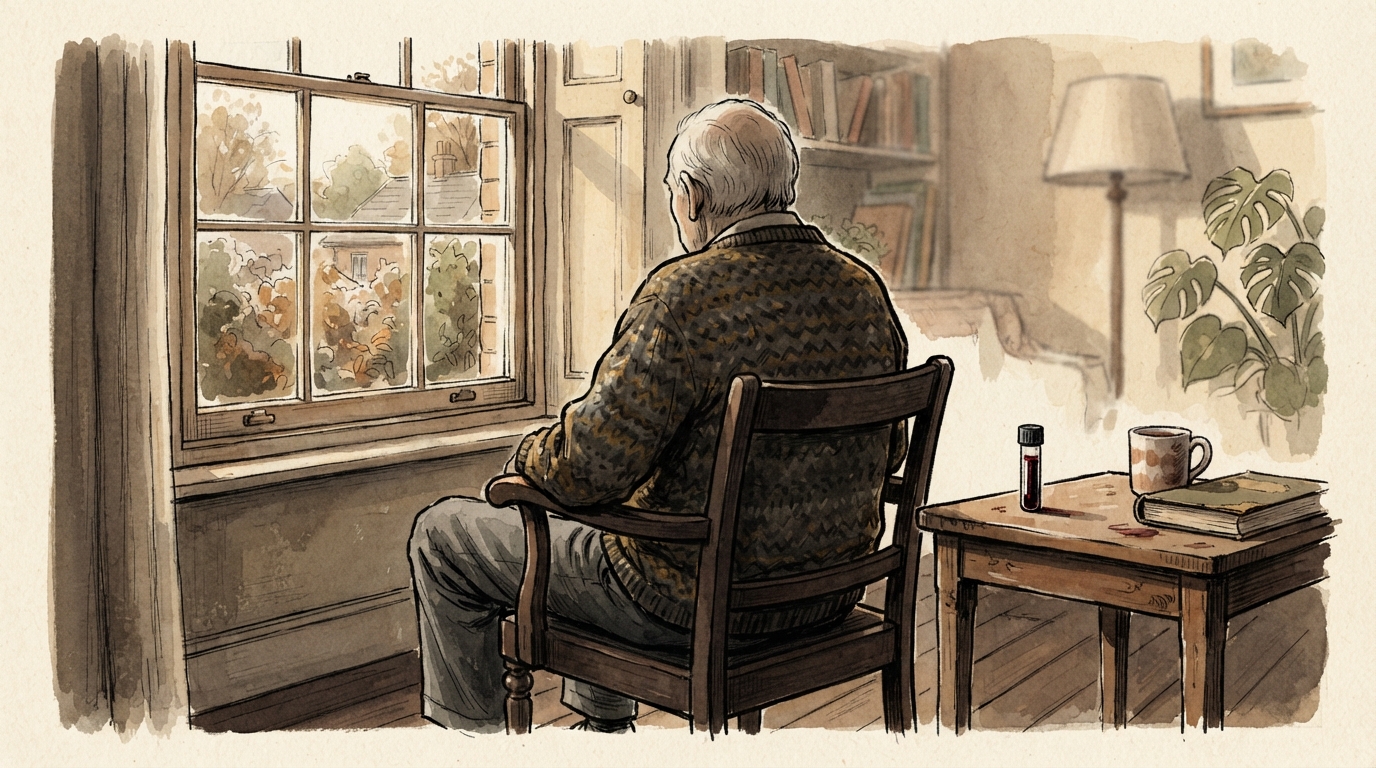
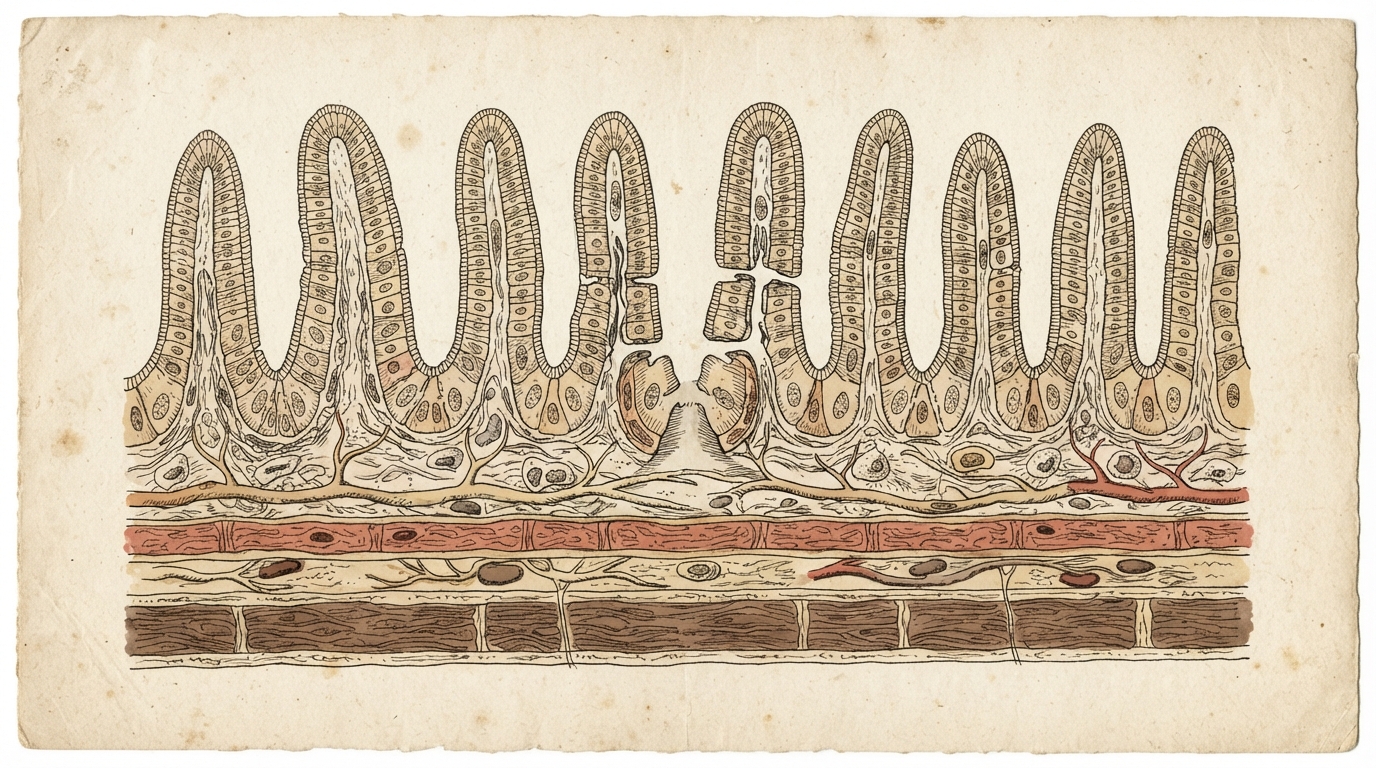
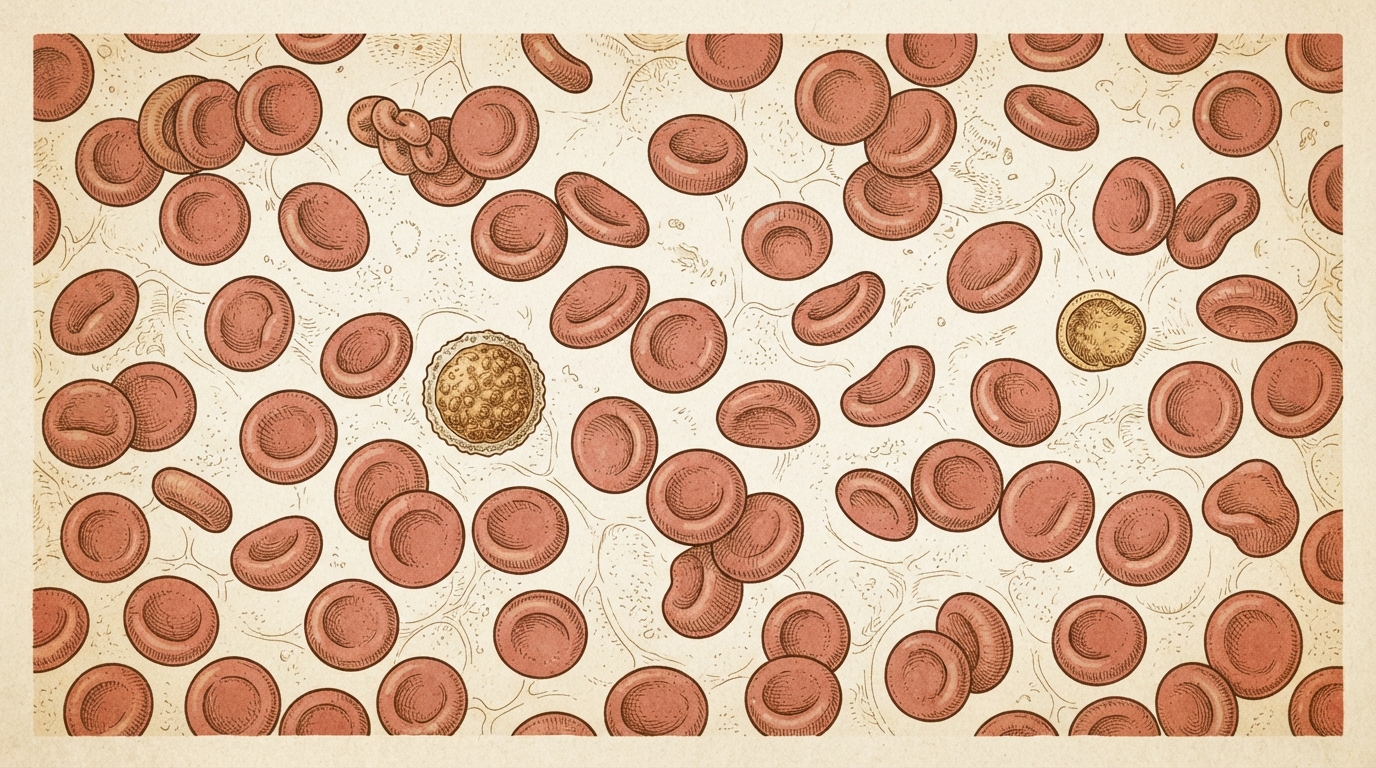
Now return to that sugar in old blood. As we age, the gut wall grows leaky, and ADP-heptose — made constantly by our own gram-negative gut bacteria — begins to seep into the circulation. `F9` It reaches the blood-forming stem cells in the marrow, where ALPK1 is waiting. The sensor fires, NF-κB switches on `F9` — and in stem cells that already carry a common age-related mutation, that chronic push hands them an advantage. They expand. `F9` This is clonal hematopoiesis — a driver of blood cancer and heart disease — and in 2025 it was traced to a microbial sugar felt by ALPK1. `F9` Inflammaging, made molecular.
07CAN YOU DRUG THE SENSOR? (how DF-003 works)
So can you drug the sensor itself? For years the only move was to fight the fire downstream — anti-TNF, anti-IL-6 — which calms symptoms but doesn't save the retina. `F7` Now there's a sharper tool. A small molecule called DF-003 slips into the kinase's ATP socket — the fuel port ALPK1 needs to add its phosphate — and jams it. `F11` No phosphate, no TIFA signal, no NF-κB: the alarm goes quiet at its source. `F11` And because the plug sits in the engine, not the sugar sensor, it silences even the hair-trigger ROSAH mutant, which fires with no sugar at all. `F11` In a first small trial, ROSAH patients' inflammation, their spleens, even their sweating improved — then relapsed when the drug stopped, the signature of hitting the real target. `F11` And the same axis reaches beyond one rare disease: the scientists who found ADP-heptose in aging blood name this pathway itself — sensor and sugar — as a target to stop those rogue clones before they turn. `F9` Whether quieting ALPK1 can bend the long arc of aging, though, no one has answered yet. `F9`
08TIMELINE + SIGN-OFF
One gene, feeling for a bacterial sugar — a guardian in infection, a slow arsonist in age. ALPK1. — The Gene Channel.
The write-up
In one line: ALPK1 is the cell's inside alarm for a bacterial sugar — a guardian against infection that, as the aging gut begins to leak, becomes a slow driver of inflammation and clonal blood disease.
The gene
ALPK1 — alpha-kinase 1 — sits on the long arm of chromosome 4, at 4q25. It belongs to the alpha-kinases, an atypical enzyme family unrelated in structure to conventional protein kinases. But ALPK1 is not a metabolic housekeeper: it is an intracellular pattern-recognition receptor — an alarm wired into the cytosol of your cells.
The mechanism
ALPK1 listens for ADP-heptose, a sugar intermediate that gram-negative bacteria make while building their outer coat. This is not the finished endotoxin, LPS — that one is caught at the cell surface by a different sensor, TLR4. When ADP-heptose leaks into the cytosol, ALPK1 binds it, switching on its kinase. It then stamps a single phosphate onto the adaptor protein TIFA at threonine 9; phospho-TIFA oligomerizes into a lattice called a TIFAsome, which recruits TRAF6 and lights up the master inflammatory switch, NF-κB. One leaked sugar, and the cell declares an infection.
When the alarm sticks
A single dominant change — Thr237→Met — makes the sensor hair-trigger: it fires with no bacteria at all. That gain-of-function variant causes ROSAH syndrome (Retinal dystrophy, Optic-nerve edema, Splenomegaly, Anhidrosis, Headache), an NF-κB-driven autoinflammatory disease. ALPK1 variants also track with gout in Taiwanese cohorts — though notably not in Japanese cohorts, where a neighbouring gene carries the signal.
The aging angle
As we age, the intestinal barrier grows leaky, and ADP-heptose — made constantly by our own gram-negative gut bacteria — begins to seep into the circulation, where younger blood carries none. It reaches blood-forming stem cells, where ALPK1 fires NF-κB; in cells that already carry a common age-related mutation (e.g. DNMT3A), that chronic push hands them an advantage. They expand — clonal hematopoiesis, a driver of blood cancer and heart disease — traced in 2025 to a microbial sugar felt by ALPK1. Inflammaging, made molecular.
The frontier
For years the only option in ROSAH was to blunt the fire downstream (anti-TNF, anti-IL-6), which eases symptoms but doesn't save the retina. Now there is a direct tool: DF-003, an oral, ATP-competitive inhibitor that plugs the ALPK1 kinase's ATP socket — so it can't phosphorylate TIFA, and the alarm goes quiet at its source. Because the plug sits in the ATP site (not the ADP-heptose pocket), it silences even the ligand-independent ROSAH mutant. A first Phase 1b trial in six ROSAH patients saw inflammation, spleen size, and sweating improve — then relapse off-drug, the signature of hitting the real target. The scientists who found ADP-heptose in aging blood name this same axis as a target to stop rogue clones before they turn; whether quieting ALPK1 can bend the long arc of aging is, as yet, untested.
Sources
Full claim-by-claim evidence is in references.md. Primary anchors:
- Zhou et al., Nature 561:122 (2018) — ALPK1 is the cytosolic receptor for bacterial ADP-heptose (PDB 5Z2C).
- Milivojevic et al., PLoS Pathog (2017) — ALPK1 → TIFA-Thr9 → TIFAsome → TRAF6 → NF-κB.
- Kozycki et al., Ann Rheum Dis 81:1453 (2022) — gain-of-function ALPK1 (T237M) causes ROSAH syndrome.
- Agarwal et al., Nature (2025) — ADP-heptose in aging blood drives clonal hematopoiesis via ALPK1.
- Fan et al., Nat Commun (2025) — DF-003, a direct ATP-competitive ALPK1 inhibitor; Phase 1b in ROSAH (NCT06395285).
Accuracy note: ALPK1 senses ADP-heptose, not LPS (TLR4 handles LPS); the adaptor is TIFA, not the inhibitory paralog TIFAB. The ROSAH variant T237M is gain-of-function and autosomal dominant, not a broken gene. The gout link is population-specific (replicated in Taiwanese, not Japanese, cohorts). DF-003 is an ATP-competitive kinase-domain inhibitor in early clinical testing (Phase 1b, n=6) — not an approved drug or a cure. "Sealing the gut" is not a proposed therapy — the aging finding points to targeting the ADP-heptose–ALPK1 axis itself.
The evidence
Every claim, sourced
Each [F#] you hear in the film links to the source it came from. Nothing gets narrated until every one is checked and signed off.
Sign-off
- PhD sign-off — facts above are correct; traps stated correctly in
script.md. - F1 — consensus ligand is ADP-heptose (not HBP); ALPK1 senses ADP-heptose, TLR4 senses LPS.
- F6 — gout association carries the Taiwanese-vs-Japanese population caveat.
- F7 — T237M stated as gain-of-function, autosomal dominant.
- F9 — Agarwal 2025 framed as newly-described mechanism, no over-claim of proven aging prevention.
- F10 — ALPK1–STING crosstalk kept tentative (recent); now background only (dropped from narration).
- F11 — DF-003 stated as ATP-competitive KINASE-domain inhibitor (not a sugar-pocket blocker); Phase 1b n=6, not "approved"/"cure"; ATP-site mechanism is why it works on the ligand-independent T237M mutant.
- Numbers/dates verified (or narration kept qualitative).
**Gate OPEN** — user-approved 2026-08-06 after fact-gate research pass (paperclip PMC + WebSearch);
- F1
ALPK1 is an intracellular immune sensor that directly binds the bacterial LPS-precursor sugar ADP-heptose (ADP-D-glycero-β-D-manno-heptose) in the cytosol — not LPS itself (LPS is caught at the surface by TLR4) — and this binding switches on its alpha-kinase.
Zhou 2018 Nature established ALPK1 as the cytosolic receptor for ADP-heptose; ligand binds the N-terminal domain, activating the C-terminal alpha-kinase. Crystal PDB 5Z2C. Earlier Milivojevic 2017 proposed the related precursor HBP; consensus ligand is now ADP-heptose. TRAP: ADP-heptose ≠ LPS; ALPK1 ≠ TLR4.
- F2
Activated ALPK1 phosphorylates the adaptor TIFA on Thr9; phospho-TIFA oligomerizes into TIFAsomes that recruit TRAF6 → NF-κB.
Zhou 2018 (pathway); Milivojevic 2017 (TIFA Thr9 + FHA-domain oligomerization needed for NF-κB/IL-8). TRAP: substrate is TIFA, not the inhibitory paralog TIFAB; effector is TRAF6.
- F3
ADP-heptose drives ALPK1 autophosphorylation and TIFA-Thr9 phosphorylation in vitro (mechanism confirmed biochemically).
García-Weber 2023 Sci Rep: ADP-heptose-dependent ALPK1 autophosphorylation; TIFA T9 primary site.
- F4
ALPK1 (alpha-kinase 1) maps to chromosome 4q25; NCBI Gene ID 80216.
NCBI Gene / OMIM *607347. TRAP: cytoband is 4q25 (not 4q21/4q31, the wider linkage region shared with ABCG2).
- F5
ALPK1 is an alpha-kinase — an atypical kinase family (Ryazanov) that phosphorylates residues in α-helical contexts and is structurally unrelated to conventional kinases (kin of eEF2K, TRPM6/7).
Cong 2018 review (alpha-kinase family context + 2018 discovery).
- F6
Variants near ALPK1 associate with gout in Taiwanese cohorts (rs11726117 M861T, adj. OR ~1.53 in aborigines) but this did NOT replicate in Japanese cohorts, where ABCG2 carries the locus signal.
Ko 2013 (Taiwanese association); Chiba 2014 (Japanese non-replication, p=0.44). TRAP: population-specific — do NOT state as a confirmed pan-ethnic gout gene.
- F7
Heterozygous gain-of-function ALPK1 variant p.Thr237Met causes ROSAH syndrome (Retinal dystrophy, Optic nerve edema, Splenomegaly, Anhidrosis, Headache), an autosomal-dominant NF-κB-mediated autoinflammatory disease; mutant sensor fires without bacteria; anti-TNF / anti-IL-6 help.
Williams 2019 (T237M in 5 families); Kozycki 2022 (27 patients, constitutive NF-κB/STAT1, GOF, +Y254C; adalimumab/tocilizumab benefit). TRAPS: GAIN- not loss-of-function; autosomal DOMINANT; mutation is in the N-terminal sensor domain, not the kinase domain.
- F9
ADP-heptose accumulates in the circulation of older humans (absent in the young); it comes from gram-negative gut bacteria across an age-leaky gut, reaches marrow, activates ALPK1→NF-κB in HSCs and gives common age-mutant (e.g. DNMT3A) clones an advantage — driving clonal hematopoiesis (CHIP). Described 2025. The paper explicitly frames the ADP-heptose–ALPK1 axis as "a promising therapeutic target to prevent progression of CHIP" — but proposes targeting the axis (sensor/signal), NOT gut-barrier repair.
Agarwal 2025 Nature, "Microbial metabolite drives ageing-related clonal haematopoiesis via ALPK1." TRAP/HONESTY: humans cannot make ADP-heptose (only bacteria); newly described 2025; no human intervention trial — do not claim proven prevention. "Sealing the gut" is NOT proposed by the paper — do not present barrier repair as a therapy.
- F10
ALPK1 signalling crosstalks with the STING pathway to amplify innate inflammation, offering a rationale for the interferon signature in ROSAH.
Shi 2025 (ALPK1–STING synergistic axis). HONESTY: recent (2025) preprint-stage; cell-system evidence, clinical implications still emerging — keep framing tentative. (Background — no longer narrated in seg-07.)
- F11
DF-003 (Drug Farm) is a first-in-class oral, ATP-competitive small-molecule inhibitor of the ALPK1 kinase domain — it occupies the ATP site so ALPK1 can't phosphorylate TIFA, shutting the pathway at its source. IC50 1.5 nM wild-type / 16 nM on the ROSAH T237M mutant, ≥860-fold selective across 394 kinases; co-crystal PDB 9J4P. Because it blocks the ATP site (not the ADP-heptose pocket), it silences the ligand-independent T237M mutant. Phase 1b in 6 genetically-confirmed ROSAH patients (NCT06395285) reported improvements (anhidrosis, spleen size, systemic inflammation) that reversed off-drug; FDA Fast Track + Orphan.
Fan et al. Nat Commun 2025 (DF-003 discovery + preclinical + structure); trial NCT06395285; Phase 1b top-line presented ARVO/IMMUNOLOGY 2026. TRAP: it is an ATP-competitive KINASE-domain inhibitor, NOT an ADP-heptose-pocket blocker — that is precisely why it works on the ligand-independent mutant. Early clinical (Phase 1b, n=6): do NOT call it approved or a cure.