ABCC11
The Wet/Dry Switch
One letter decides whether your earwax is wet or dry — and whether your armpits make body odor at all. The same letter traces an ancient human migration out of northeast Asia.
The walkthrough
Beat by beat
HOOK
0:22
01HOOK
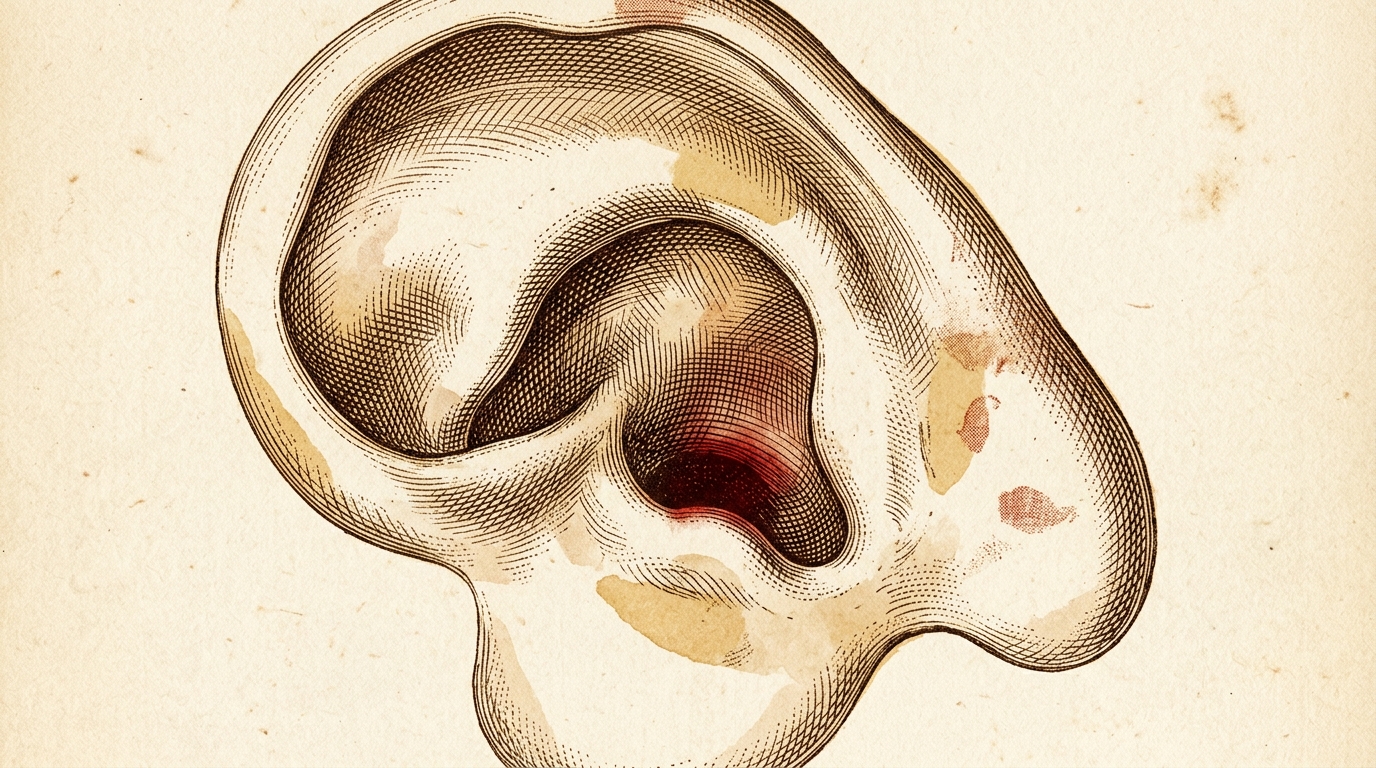
Your earwax is either wet and sticky, or dry and flaky — and which one you have comes down to a single letter of your DNA `F1`. The very same letter, in the very same gene, also decides whether your armpits can make body odor at all `F2`. One typo. Two of your body's strangest secrets.
02THE NAME
The gene is ABCC11, on chromosome 16 `F3`. It builds a microscopic pump that sits inside your apocrine glands — the special sweat glands that line your ear canals, your armpits, and your breasts `F4`. At one position in that gene, people carry either a G or an A `F5`. That single base decides everything downstream.
03THE HUNT
It was tracked down in 2006, by Koh-ichiro Yoshiura, Norio Niikawa, and their team in Nagasaki, Japan `F6`. They scanned the genomes of more than a hundred volunteers — some wet-eared, some dry — narrowing the signal to one stretch of chromosome 16, then to thirty-seven candidate letters, and finally to a single one `F7`. It was the first time a single letter of DNA had been shown to control a visible, everyday human trait `F8`.
04THE MECHANISM (hero)
Here's why one letter matters. The G version builds a working pump. The A version swaps one building block of the protein — and the broken pump never even finishes being made: the cell flags it as defective and shreds it before it ever reaches the gland `F9`. No pump, nothing gets secreted. So inherit two A's — one from each parent — and you get dry earwax `F10`. A single working G is enough for wet — it wins `F11`.
05THE SMELL
And the pump's other job is your smell. Fresh sweat from these glands is completely odorless `F12`. The working pump loads it with invisible, scentless molecules — and then bacteria living on your skin take over, snipping those molecules into the pungent compounds we call body odor `F13`. The smell isn't really made by you. It's made by Staphylococcus hominis, feeding on what your pump puts out `F14`. Break the pump, and the bacteria get almost nothing to work with — and almost nothing to smell `F15`.
06THE MICROBIOME
So this gene doesn't just change your wax and your sweat — it changes who lives on you. A working pump feeds the odor-making Staph; a broken one leaves the armpit to entirely different microbes `F16`. And deep in the ear canal, wet-wax and dry-wax ears grow measurably different communities of bacteria `F17`. Your genome writes the menu; your microbiome shows up to eat.
07THE MAP
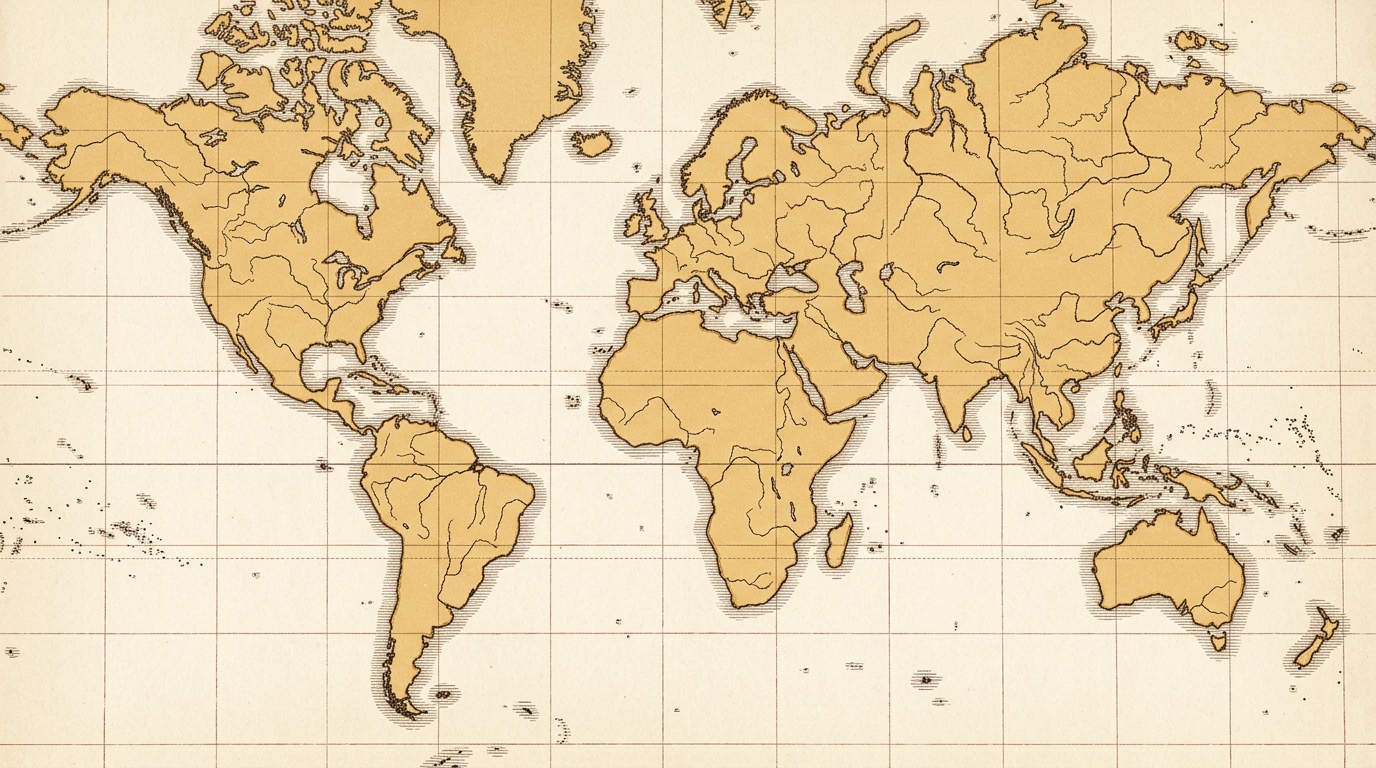
That one letter also draws a map. The dry-earwax A first arose in northeast Asia, perhaps forty thousand years ago `F18`. Today it's carried by eighty to ninety-five percent of East Asians — and almost no one of European or African descent, where wet wax and body odor are nearly universal `F19`. It's why the deodorant aisle looks so different around the world — and why, in Japan, strong body odor is a recognized medical condition, sometimes diagnosed in part by checking a person's earwax `F20`.
08SIGN-OFF
One letter. A pump in three glands, a smell outsourced to bacteria, and a map of where your ancestors came from — all written in your earwax. — The Gene Channel.
The write-up
In one line: A single letter in the gene ABCC11 decides whether your earwax is wet or dry, whether your armpits can make body odor, and which microbes live on your skin — and that one letter traces a map of human migration.
The gene
ABCC11 sits on chromosome 16 (band 16q12.1). It encodes an ATP-binding cassette transporter — a microscopic molecular pump — that works inside your apocrine glands, the specialized sweat glands that line your ear canals, your armpits, and your breasts. At one position in the gene (base 538), people carry either a G or an A. That single nucleotide polymorphism — rs17822931, which swaps amino acid Gly180 for Arg180 — turns out to control a surprising amount of everyday human biology.
The hunt
The switch was identified in 2006 by Koh-ichiro Yoshiura, Norio Niikawa, and their colleagues at Nagasaki University in Japan. They genotyped more than a hundred volunteers — some with wet earwax, some with dry — and scanned their genomes, first narrowing the signal to a small pericentromeric region of chromosome 16, then to a handful of candidate genes, and finally, across 37 SNPs, to the single base in ABCC11. People with dry earwax were all homozygous for one allele, exactly as expected for a recessive Mendelian trait. It was the first time a single letter of DNA was shown to determine a visible, everyday human trait — earwax type is now a classroom example of a one-SNP phenotype.
The mechanism
Why does one letter matter so much? The G version of the gene builds a working pump. The A version changes a single amino acid in the protein, and that change has a drastic consequence: the variant protein lacks an N-linked sugar tag it should carry, so the cell's quality-control machinery reads it as misfolded and destroys it by the ubiquitin–proteasome pathway (ER-associated degradation) before it ever reaches the gland. No pump means nothing gets secreted. Inherit two A's — one from each parent — and you get dry earwax; a single working G is enough for wet, which is dominant.
The smell, and the microbiome
The pump's second job is your body odor. Fresh apocrine sweat is completely odorless. The working pump secretes invisible, scentless precursor molecules onto the skin, where bacteria take over: skin commensals — notably Staphylococcus hominis, using a Cys-S-conjugate β-lyase (PatB) — cleave the precursors into the volatile thiol (3M3SH) we recognize as body odor. The smell, in other words, isn't really made by you; it's made by your microbes feeding on what the pump puts out. Break the pump (the A/A genotype) and the bacteria lose their substrate — and there's almost nothing to smell.
Because the pump sets the chemical "menu," it also shapes who lives on you. Armpits of people with the working allele are dominated by odor-making Staphylococcus; those without it shift toward Corynebacterium and other microbes. The same genome–microbiome interaction shows up deep in the ear canal, where wet-wax and dry-wax ears grow measurably different bacterial communities.
The map
That one letter also draws a map of human history. The dry-earwax A allele arose in northeast Asia, perhaps ~40,000 years ago, and spread along a geographic gradient that peaks in Korea and northern China. Today it's carried by roughly 80–95% of East Asians — and by almost no one (≈0–3%) of European or African descent, where wet earwax and body odor are nearly universal. It's part of why the deodorant aisle looks so different around the world, and why, in Japan, strong body odor (axillary osmidrosis) is a recognized medical condition — historically diagnosed, in part, by checking a person's earwax.
Sources
Full claim-by-claim evidence is in references.md. Primary anchors:
- Yoshiura et al. (2006) — A SNP in the ABCC11 gene is the determinant of human earwax type. Nature Genetics 38, 324–330. (the discovery)
- Toyoda et al. (2009) & Ishikawa, Toyoda, Yoshiura & Niikawa (2013) — the proteasomal-degradation mechanism and a full review by the discovery team. FASEB J / Frontiers in Genetics.
- Stevens & Roesch (2024) — the armpit microbiome / 3M3SH body-odor pathway. Scientific Reports.
- Amari et al. (2025) — the ear-canal microbiome differs by ABCC11 genotype. Microbiology Spectrum.
- Ohashi, Naka & Tsuchiya (2011) — the age and selection history of the allele. Molecular Biology and Evolution.
Accuracy note: The earwax literature (including the 2006 discovery) names this variant 538G>A (G = wet, A = dry). NCBI dbSNP lists the same variant on the opposite DNA strand as c.538C>T (C = wet, T = dry). They are identical — same SNP rs17822931, same amino-acid change Gly180Arg, same direction (ancestral wet → derived dry); they differ only by which strand is read. This episode uses the G/A convention throughout.
The evidence
Every claim, sourced
Each [F#] you hear in the film links to the source it came from. Nothing gets narrated until every one is checked and signed off.
Sign-off
- Fact sources recorded — every F1–F20 mapped to a primary/authoritative source; 4 in-corpus claims machine-verified against full text (paperclip repo
abcc11, all [OK]). - Trap stated — G/A vs C/T strand convention flagged; script uses the earwax-literature G/A convention consistently.
- Numbers kept qualitative/range-bound where sources vary (allele %, allele age).
- Runtime + script approved by user — extended ~3:50 cut approved as written (2026-06-27); all 8 beats kept.
Gate OPEN → narration + render may proceed.
- F1
Earwax type (wet/sticky vs dry/flaky) is determined by one SNP
"the SNP 538G>A (rs17822931; Gly180Arg) in the ABCC11 gene determines the type of earwax in humans"; 538A/A = dry, G/A & G/G = wet
- F2
The same SNP also governs whether the armpits make body odor
Axillary osmidrosis strongly associated with the wet (G/G,G/A) genotype; the variant blocks the odor-precursor pathway
- F3
ABCC11 sits on chromosome 16 (16q12.1)
"located on human chromosome 16q12.1"
- F4
It builds an ABC-transporter pump in apocrine glands (ear/cerumen, axilla, breast)
ABCC11 is an ATP-binding-cassette transporter; WT protein expressed in cerumen (apocrine) glands; apocrine glands also in axilla & breast
- F5
At position 538 people carry a G or an A
Non-synonymous SNP rs17822931, c.538G>A in exon 4
- F6
Found in 2006 by Yoshiura, Niikawa & team in Nagasaki, Japan
Yoshiura et al., Nature Genetics 2006 (Nagasaki University group)
- F7
Method: scanned >100 wet/dry volunteers → narrowed to a chr-16 region → 37 SNPs → the one letter
"genotyping… 64 dry + 54 wet… 134 CA markers → 2.5-Mb pericentromeric 16q… association of 118 samples using 37 SNPs… 538G>A (G180R) in exon 4"
- F8
First time a single DNA letter was shown to determine a visible, everyday trait
"the first example of [a] DNA polymorphism determining a visible genetic trait"
- F9
The A variant (Gly180→Arg180) is mis-made: it lacks a sugar tag, is read as misfolded, and is destroyed by the proteasome before reaching the gland
"SNP variant R180 lacking N-linked glycosylation is recognized as a misfolded protein in the ER and readily undergoes ubiquitination and proteasomal degradation (ERAD pathway)"
- F10
Two A's (A/A) → dry earwax (recessive)
"The 538A/A genotype gives the dry phenotype"
- F11
A single working G → wet (dominant)
"both the 538G/A and G/G genotypes give the wet phenotype… the wet phenotype is dominant to the dry one"
- F12
Fresh apocrine sweat is odorless
"Sweat produced by the axillary apocrine glands is odorless"; odorless precursor generated by host metabolism
- F13
Skin bacteria cleave the odorless precursors into the smelly compounds (thiols)
Secretions "converted to odoriferous compounds by bacteria"; bacteria take up odorless S-Cys-Gly-3M3SH and bioconvert it to volatile 3M3SH
- F14
The smell is largely made by Staphylococcus hominis feeding on the pump's output
"Cys-S-conjugate β-lyase (PatB)… of Staphylococcus hominis… necessary and sufficient to enzymatically convert human… precursor into… 3M3SH"
- F15
Broken pump → bacteria lose their substrate → far less odor
"Mutant ABCC11… fails to export the conjugated thiol substrates… thus TT haplotype thwarts the entire thiol odor generating process"
- F16
The genotype reshapes the armpit microbiome (odor-Staph vs other microbes)
TT (dry/LOF) hosts had "significantly diminished prevalence and relative abundance of Staphylococcus, and instead favored… Corynebacterium"
- F17
Wet- vs dry-wax ear canals grow measurably different bacterial communities
"Staphylococcus auricularis and Corynebacterium spp. observed in the 538GA group, whereas Methylocella spp. in the 538AA group"; β-diversity & metabolic pathways differ
- F18
The dry A allele arose in NE Asia ~40,000 years ago
"a c.538G→c.538A mutation may have occurred some 40,000 years ago in… ancient Northern Mongoloids"
- F19
Dry allele ≈ 80–95% of East Asians; ≈ 0–3% of Europeans/Africans (where wet wax + odor are near-universal)
538A high in Asian populations (peak Korea), low in Caucasians/Africans; T(=A) allele ~80–95% E. Asia, 0–3% Europe/Africa
- F20
In Japan, axillary osmidrosis is a recognized medical condition; wet earwax is used as a diagnostic criterion
"axillary osmidrosis is recognized as a disease… covered by the national health insurance system"; wet-type earwax used "as one of [the] diagnostic criteria"